Issue 153

Seven Sons: Harbin Institute of Technology

We recently dove into Nanjing University of Science and Technology, where we highlighted their contributions to China’s blossoming space program as one of the Seven Sons of National Defense. This week, we examine the Harbin Institute of Technology (HIT). HIT was established in 1920 and is known as “the cradle of engineers.” In terms of school prestige, HIT has led 11 national science and technology awards, with four projects listed among the Top 10 Scientific and Technological Advances in Chinese Universities.

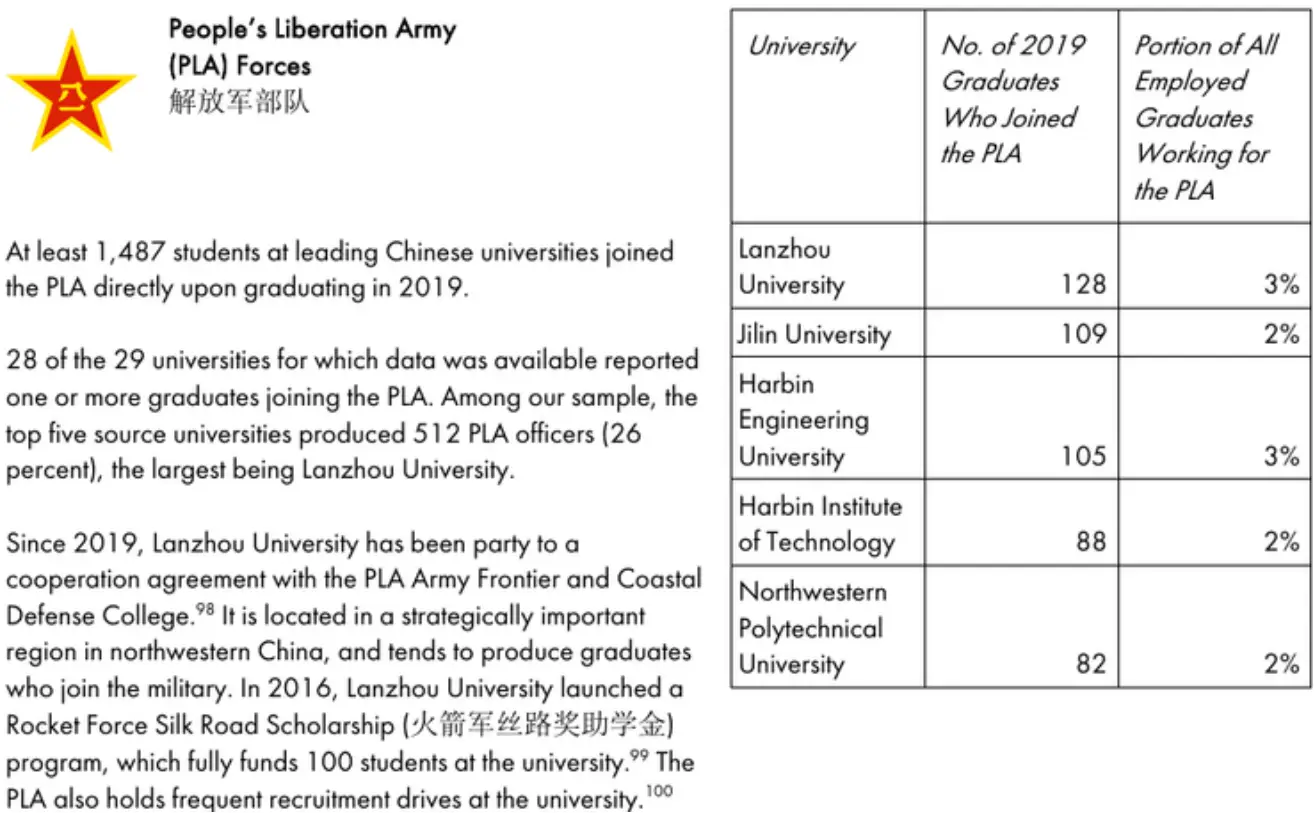
Specifically for the space domain, HIT launched China’s first university-developed satellite, pioneered the country’s first space-to-ground laser communication, and developed a new, magnetic-focusing Hall-effect electric thruster. Additionally, they were instrumental in the testing of a robotic arm onboard the Tiangong-2. HIT technologies have proven to be vital towards some of the most significant accomplishments across national space missions. For example, they supported the Chang’e-5 and Chang’e-6 sample return missions. Research from HIT certainly drives the development of space capabilities for the PLA, but they also contribute directly to its workforce. Data from 2019 shows that 88 graduates directly joined the PLA upon graduation. That same year, 170 graduates went on to work for China Aerospace Science and Technology (CASC), which serves as China’s main contractor for its space program.

Graduates Who Directly Joined the PLA Upon Graduation (CSET)

One of the most notable research papers HIT produced came from authors linked to its State Key Laboratory of Robotics and Systems. The paper, titled “China’s Space Robotics for On-Orbit Servicing: The State of the Art” explicitly mentions the SJ-7 and SJ-21, describing the latter as having acheived technological breakthroughs for alleviating space debris threats in GEO. More importantly, it discusses the ongoing evolution from manipulating cooperative to uncooperative satellites. Specifically, the authors state “current evolutionary trends of on-orbit servicing tasks are showing rapid progression, from elementarily clamping cooperative LEO spacecraft via a single manipulator under master-slave teleoperation, to sophisticatedly manipulating uncooperative GEO spacecraft via multiple manipulators with physical telepresence.” In particular, the mention of physical telepresense could suggest the use of virtual reality or even haptic feedback for operators on the ground. Referencing the SJ-7 and SJ-21 as benchmarks for how this technology is evolving is interesting, considering the SJ-21 notably moved a defunct satellite in GEO back in 2022.
More recently last year, “Autonomous Spacecraft Threat Avoidance via Trajectory Prediction and Deep Reinforcement Learning” was published by members of the Department of Control Science and Engineering, Harbin Institute of Technology. What makes this paper interesting is that it references adversarial threats explicitly as the basis for maturing autonomous threat avoidance. The authors state, “Non-adversarial space debris and defunct spacecrafts, as well as adversarial space targets with ambiguous intention, constitute the potential threats to on-orbit spacecrafts. Traditional decision-making strategies for spacecraft control rely on highly accurate models, which can be challenging to construct and computationally expensive under uncertain conditions in reality.”

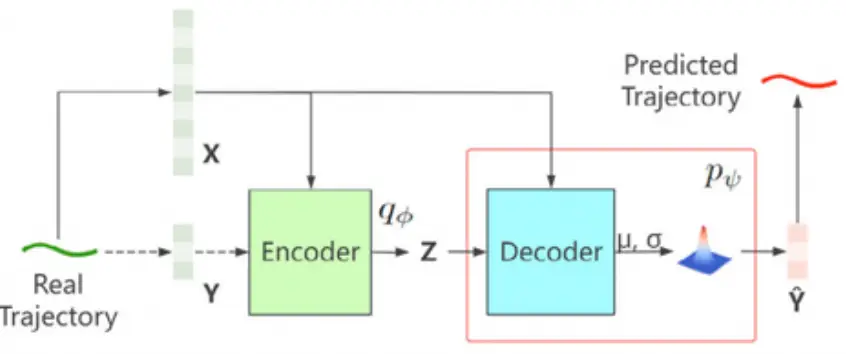
Conditional Variational Autoencoder (HIT)
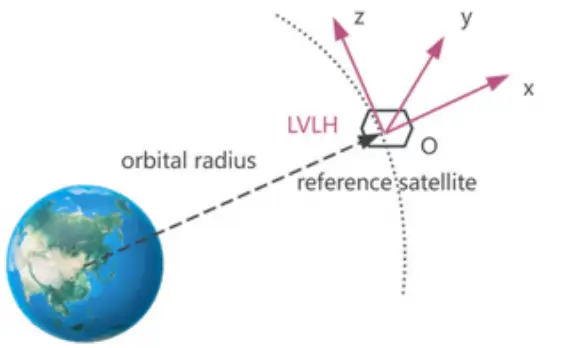
Local Vertical Local Horizontal Coordinate System (HIT)

Specifically, this paper proposes an autonomous threat avoidance decision-making strategy for use by spacecraft. Notably, it calls for the development of a Conditional Variational Autoencoder (CVAE)-based predictor to estimate future trajectories of space targets by leveraging previously collected trajectories from prior missions. Satellites today rely heavily on Kalman filters, specifically for navigation, orbit tracking, and steering. CVAEs use deep neural networks to learn complex, non-linear data patterns, while Kalman filters rely on classical probability rules with fixed mathematical assumptions. In short, a highly-complex environment with manuevering spacecraft will require an advanced predictor, such as the CVAE proposed here, to be able to avoid collisions and threats.

These are just a few examples of the work accomplished by HIT to help drive the on-orbit developments seen from China over the last decade. Given their successes, expect HIT along with the other Sons of National Defense to continue advancing China’s on-orbit capabilties.