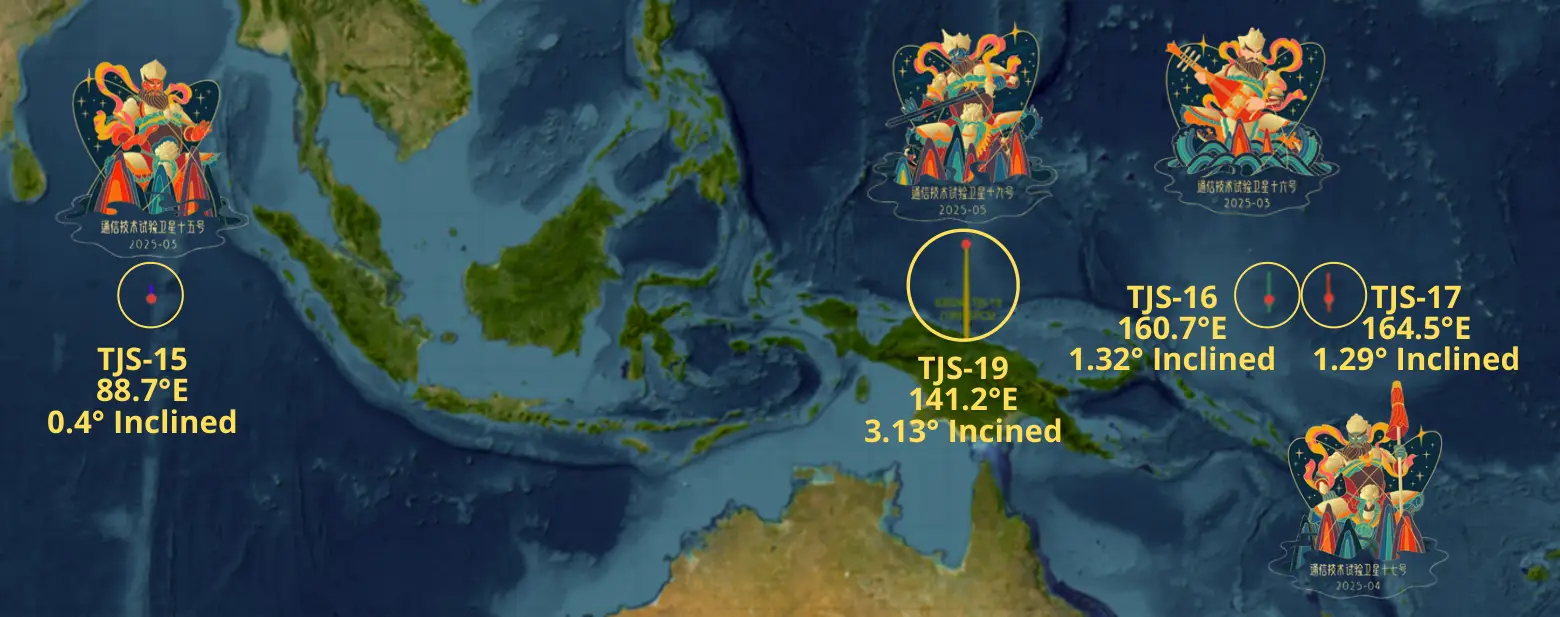
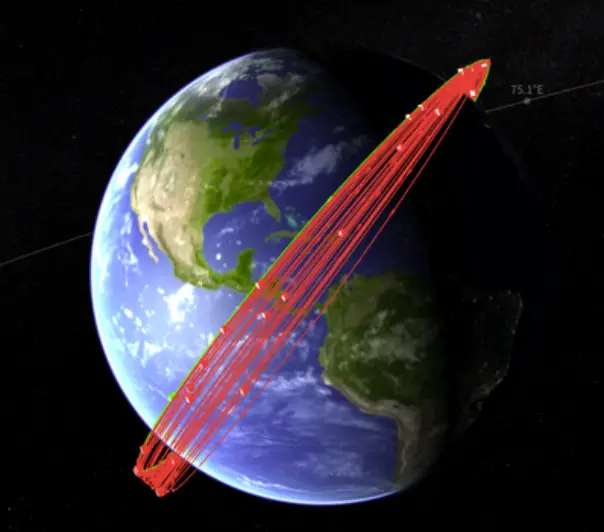
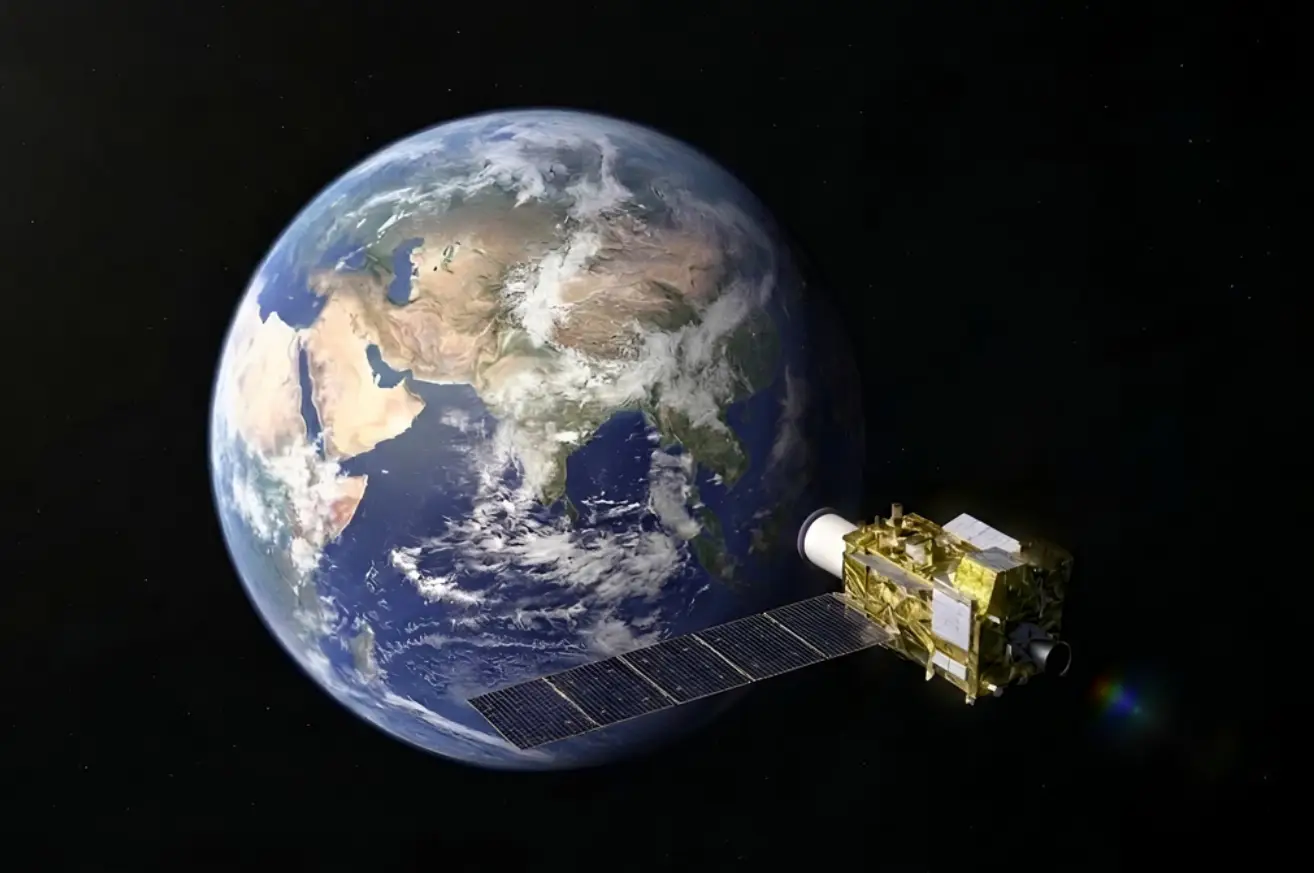
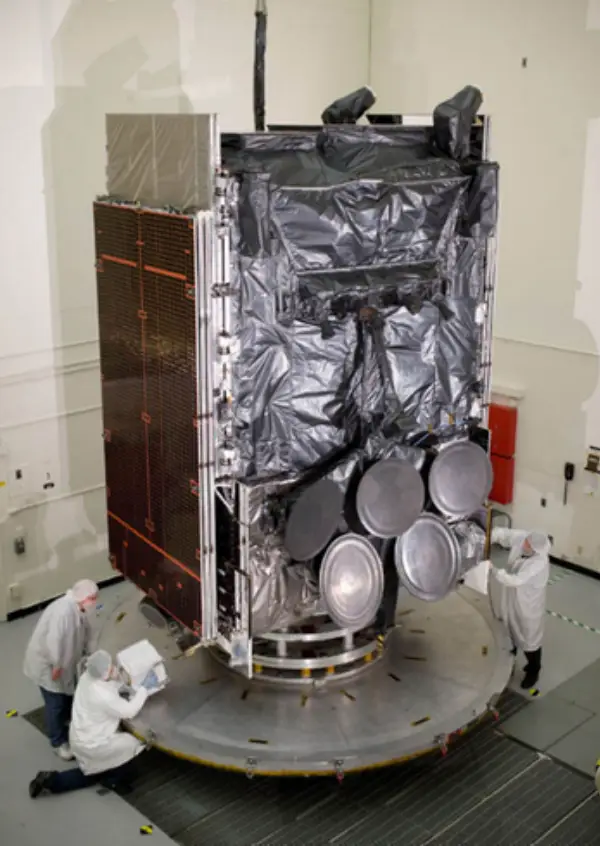
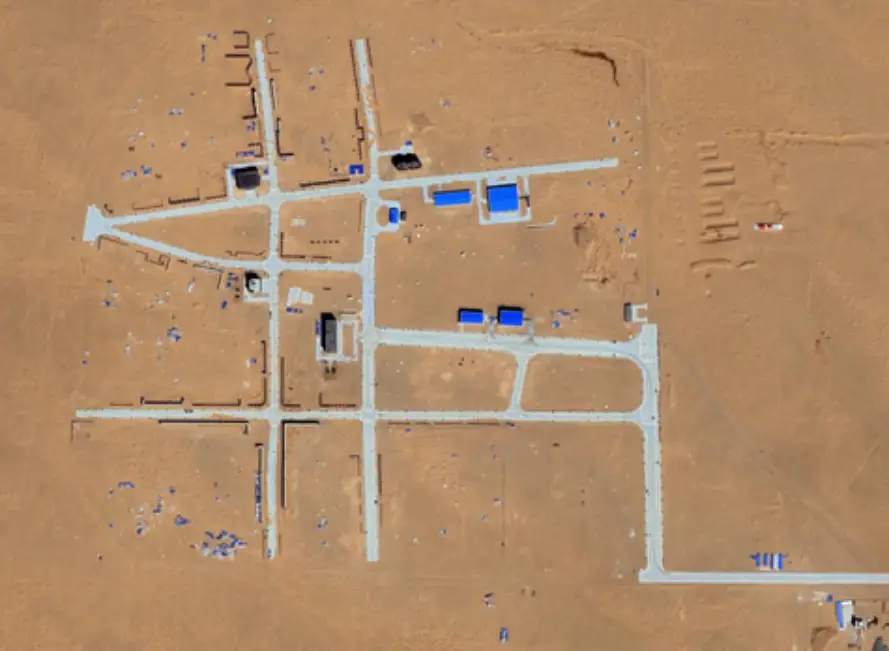
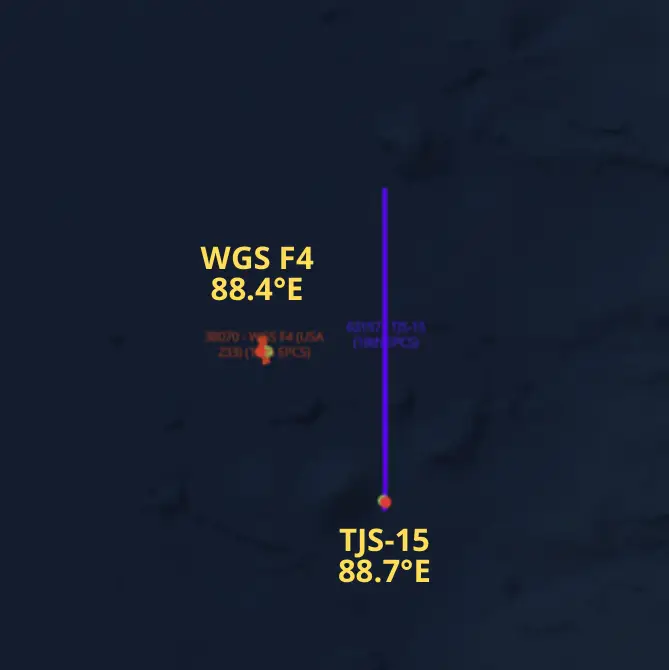
25 Aug – 5 Sep: China relocated TJS-15 (63157) “King of the West” from 94.4°E to 88.7°E. The Chinese satellite with a stated mission of verifying “multi-band and high-speed satellite communication technology” is now located in the vicinity of the US military communications satellite WGS F4 (38070) which is located at 88.4°E. Observation data indicates China drifted TJS-15 to within 100km of WGS F4 as it headed west (graph A). China decreased TJS-15’s SMA to initiate a slight eastward drift on 4 September. During this transition TJS-15 had a point of closest approach (POCA) of ~64km with WGS F4 on 4 Sep at 1250Z. At POCA the solar conditions were unfavorable for TJS-15 to observe WGS F4. China drifted TJS-15 eastward for <24hrs then increased SMA to maintain a stable position 200-400km separation from WGS F4. From this location TJS-15 could be in position to monitor WGS F4 signals.
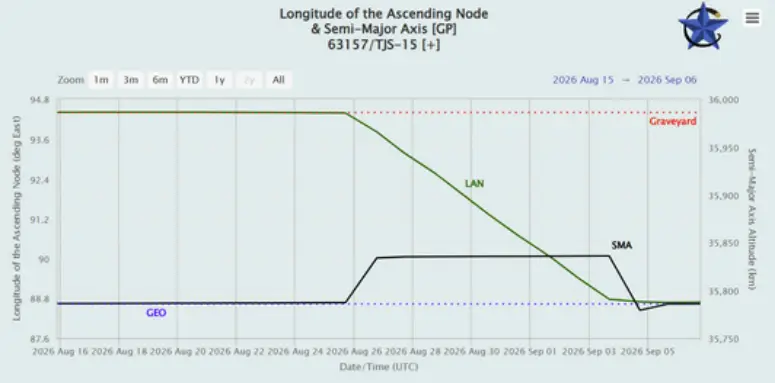
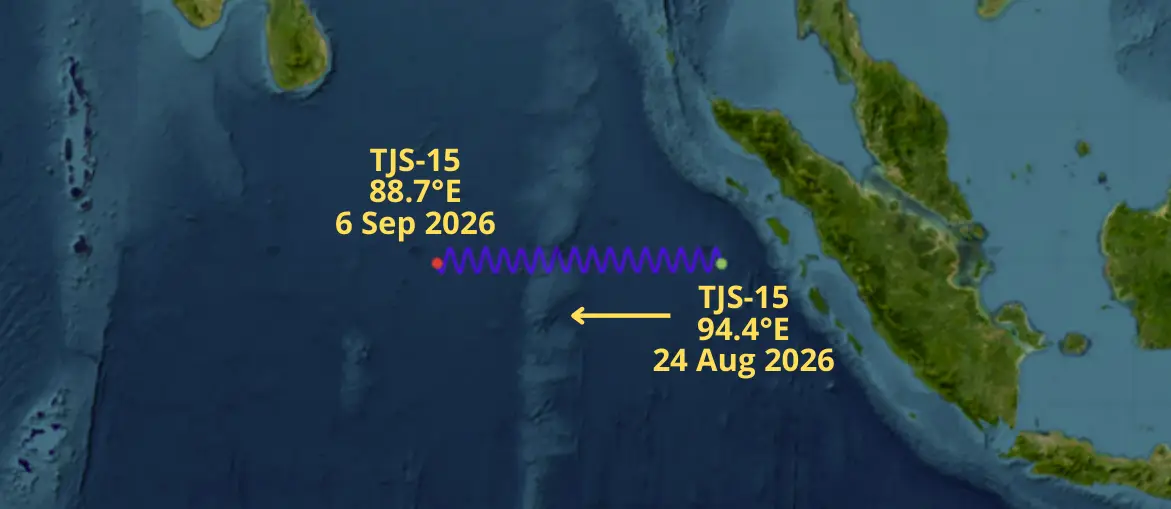
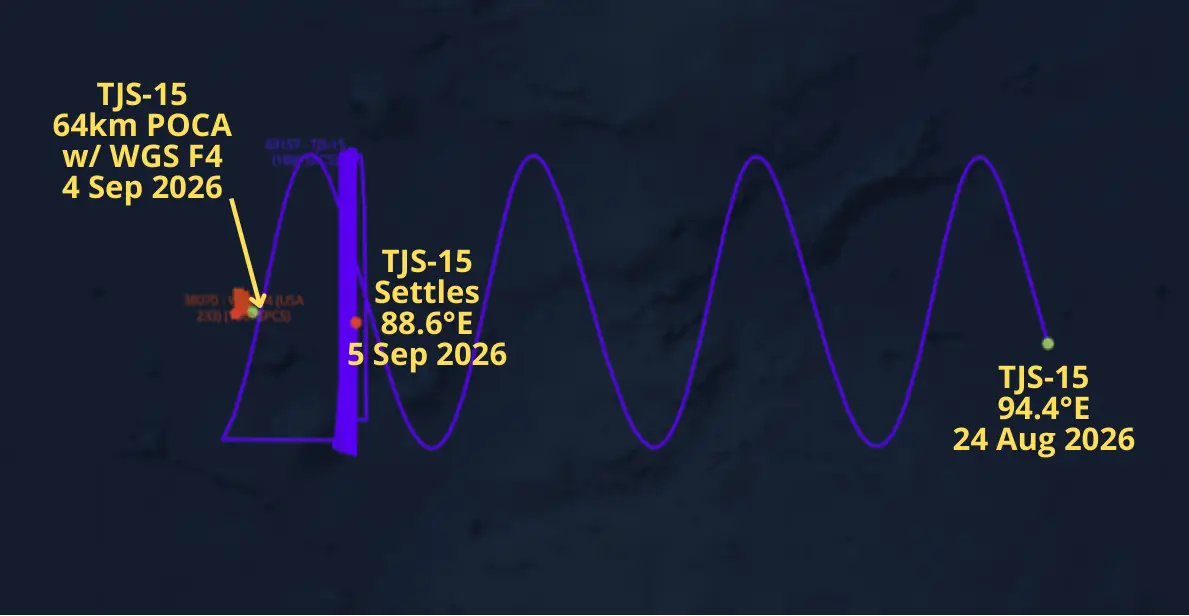
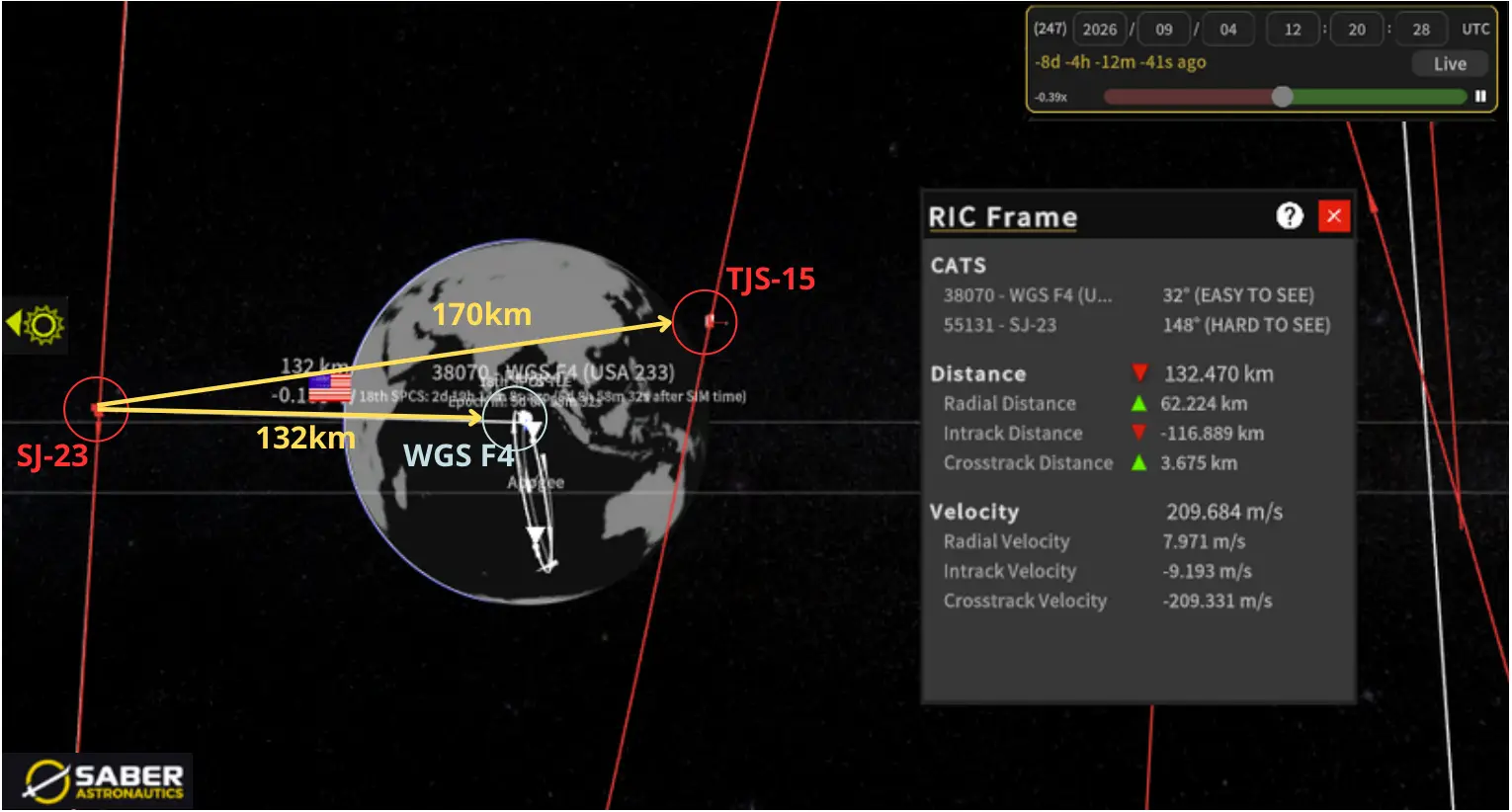
Per reporting from the Joint Commercial Operations Cell (JCO) SJ-23 (55131) happened to be in the area as TJS-15 was settling into its new orbital slot. On 4 Sep at 1220Z (30 minutes prior to TJS-15’s POCA) SJ-23 was 132km from the US satellite with optimal solar conditions for imaging. The timing may have been more than coincidental as SJ-23 conducted 2 minor maneuvers between 7-22 Aug to slightly increase its westerly drift rate from 0.724°/day to 0.847°/day during this time period.
This is TJS-15’s second relocation. In August 2025 China maneuvered TJS-15 to an orbit in vicinity of USA 315 (SBIRS GEO-5, 48618). After spending a year near that satellite, China maneuvered to WGS F4. Time will tell if this becomes a pattern. Of the 4 Kings satellites (TJS-16, 17 & 19 being the other 3) only TJS-15 has maneuvered to be in vicinity of US satellites.