
Issue 16A
01
Flash Archive · Members Only
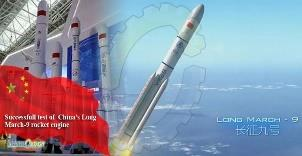
CASC announced successful tests of a range of liquid and solid rocket engines
CASC announced successful tests of liquid and solid rocket-engine technologies, including progress on a 220-ton staged-combustion engine intended for the Long March 9.
Author Greg Gillinger
Published January 31, 2021
02
Flash Archive · Members Only
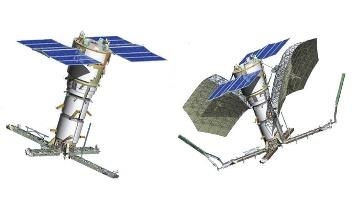
Overview: The Russian Liana constellation
The Russian Liana constellation combines Lotos ELINT satellites with the delayed Pion-NKS ELINT/SAR system, supporting intelligence collection and potential naval weapon guidance.
Author Greg Gillinger
Published January 31, 2021
Overview: The Russian Liana constellation
- The Liana constellation began development in 1993 and is composed of the Lotus electronic intelligence (ELINT) satellites & the PION-NKS, and ELINT and Synthetic Aperture Radar (SAR) imager.
- Conflicting requirements of the land-based and naval systems prompted developers to propose two variants—Lotos and Pion.
- After years of delays the first Lotus-S launched on 20 Nov 2009. However, it turned out that about half of the on-board systems did not function, which required the postponement of the launch of new satellites to a later date for the finalization of the equipment.
- The second Lotus-S launched on 25 Dec 2014. (VIDEO) There is reporting of an additional 2 Lotus-S launches: 12 Feb 2017 & 25 Oct Combined this would bring the total on-orbit inventory to 4 Lotus satellites.
- The Pion-NKS system was expected to provide all-weather target guidance and electronic intelligence for the Russian Navy.
- Pion-NKS ended up a decade behind its land-focused sibling Lotos-S. There are reports that Pion-NKS stalled around 2014, as a result of Western sanctions and the loss of Ukrainian suppliers.
- Sep 2018, Minister of Defense Sergei Shoigu said that the PION-NKS production and testing schedule…would finally be approved in October
- Mar 2020, Shoigu announced the Pion-NKS satellite…is at its final
- PION-NKS may finally launch in It is manifested to fly on a Soyuz 2-1B rocket (Serial# 77069-203) sometime in 2021 (Not earlier than March). An additional Lotus-S is also scheduled to launch in Feb 21.
While the Russian Ministry of Defense was still lacking an all-weather, day-and-night radar imaging capability from space (as of 2018), it continues to invest in developing space systems and the terrestrial infrastructure to use them. For instance, special terminals installed on Russian battleships were reported to be capable of downlinking real-time data directly from the Liana network for the purpose of weapon guidance.
Fun Fact: Over the course of the late 1980s and 1990s, China’s commercial launch industry was seeing initial signs of success, but this all changed with multiple failures in the mid-1990s, namely Apstar-2 and Intelsat-708 (more VIDEO). The two failures–both involving American-made satellites–led to the United States barring the launch of sensitive American technology on Chinese rockets…meaning no American-made satellites, and indeed few European-made ones, could launch on Chinese rockets. As a result, China focused on developing turnkey space solutions for export…building the satellite, launch vehicle, and all assorted hardware and technical services.
03
Flash Archive · Members Only
China’s first launch of 2021
China opened its 2021 launch campaign by sending the Tiantong 1-03 mobile-communications satellite to geostationary orbit on a Long March 3B.
Author Greg Gillinger
Published January 31, 2021
19 Jan 21: China’s first launch of 2021.
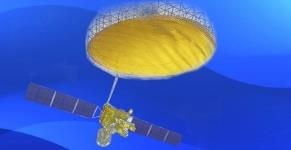
– A Chinese Long March 3B rocket launched from Xichang & deployed the Tiantong 1-03 satellite to GEO. (Launch VIDEO)
– Tiantong 1-03 is the third satellite of the communications constellation. The previous 2 satellites were launched in 2016 & 2020.
– The Tiantong constellation provides S-band mobile communications services with coverage across the Asia-Pacific region, the Middle East, and parts of Africa.
The Tiantong constellation is similar to INMARSAT and is operated by China Telecom. The launch was the first of more than 40 space missions scheduled for liftoff from China this year.
04
Flash Archive · Members Only
China launched three Yaogan military satellites
China launched a trio of Yaogan 31 military satellites on 29 January 2021, with analysts assessing the formation as a maritime-reconnaissance and signals-intelligence capability.
Author Greg Gillinger
Published January 31, 2021
29 Jan 21: China launched three Yaogan military satellites on a Long March 4C rocket, adding to a fleet of spacecraft independent analysts believe are designed to spy on naval forces. (VIDEO of LM-4C preparation & Launch)
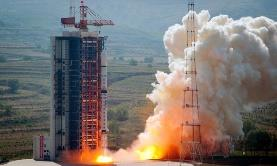
– The trio of Yaogan 31 (translated: Remote Sensing) satellites are orbiting at ~680 miles (1,100 km), with 63.4° inclination. (See Orbit)
– Yaogan 31 satellites are believed to be maritime reconnaissance satellites for tracking foreign naval movements.
– Using 3 satellites in formation allows them to intercept radio signals from the ground and calculate/track the position of warships while also studying their activity based on their radio emissions.
– Six previous Long March 4C missions in 2010, 2012, 2013, 2014, and 2018 carried similar naval surveillance satellites into space. All launched from Jiuquan to place satellite triplets into the same 680-mile-high orbit inclined 63.4° to the equator.
With this launch, there are 69 Yaogan satellites in a variety of orbits, ranging from 35° to 100° and from 480 km circular orbits to 1,200 km eccentric orbits. China launched its first Yaogan satellite in 2006 (Yaogan 1 broke up from an internal explosion in Feb 2010) and the constellation is made up of a variety of sensor types: Electro-Optical, Synthetic Aperture Radar and SIGINT.
05
Flash Archive · Members Only
Opinion: Rethinking the inevitable – preparing for space warfare
A January 2021 opinion piece by Doug Laverro argues that future conflicts will include attacks on space systems and that policymakers should prepare rules for anti-satellite warfare.
Author Greg Gillinger
Published January 31, 2021
Jan 21: Opinion piece from Doug Laverro: future conflicts will inevitably include targets in the space domain and we must rethink how we will deal with international discussions on attacks against space systems and anti-satellite (ASAT) weapons.

– By the early 2000’s it became abundantly clear that space systems were the key link in U.S. power projection and a critical vulnerability.
– Chinese strategic writings from that period stated “for countries that can never win a war with the United States by using the method of tanks and planes, attacking U.S. space systems may be an irresistible and most tempting choice.”
– Since the Outer Space Treaty of 1967, multi-lateral space treaties, principles, and resolutions have been added to the body of space law. But no new space arms control instrument has been agreed to since that time.
In some future war, anti-Satellite activities will occur – the question we need to deal with is how that war will be fought. The aversion to the creation of large-scale, long-lived debris is simply the tacit extension of already existing prohibitions on weapons that cause indiscriminate harm, a principle that underpins many other weapons-type prohibitions. When viewed from this perspective, it seems quite likely that nations could agree on such a ban, even as they continued to permit forms of attack that did not create large-scale, long-lived debris.
06
Flash Archive · Members Only
Virgin Orbit Launch Video
Virgin Orbit Launch Video.
Author Greg Gillinger
Published January 31, 2021

07
Flash Archive · Members Only
Fun Fact: China’s commercial launch industry
Fun Fact: launch failures in the mid-1990s helped reshape China’s commercial launch sector and encouraged turnkey satellite-and-launch export solutions.
Author Greg Gillinger
Published January 31, 2021
Fun Fact: Over the course of the late 1980s and 1990s, China’s commercial launch industry was seeing initial signs of success, but this all changed with multiple failures in the mid-1990s, namely Apstar-2 and Intelsat-708 (more VIDEO). The two failures – both involving American-made satellites – led to the United States barring the launch of sensitive American technology on Chinese rockets, meaning no American-made satellites, and indeed few European-made ones, could launch on Chinese rockets. As a result, China focused on developing turnkey space solutions for export – building the satellite, launch vehicle, and all assorted hardware and technical services.