
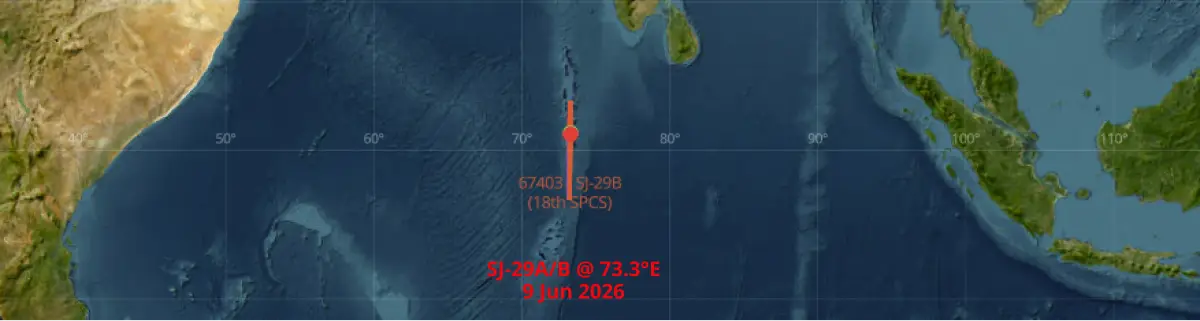
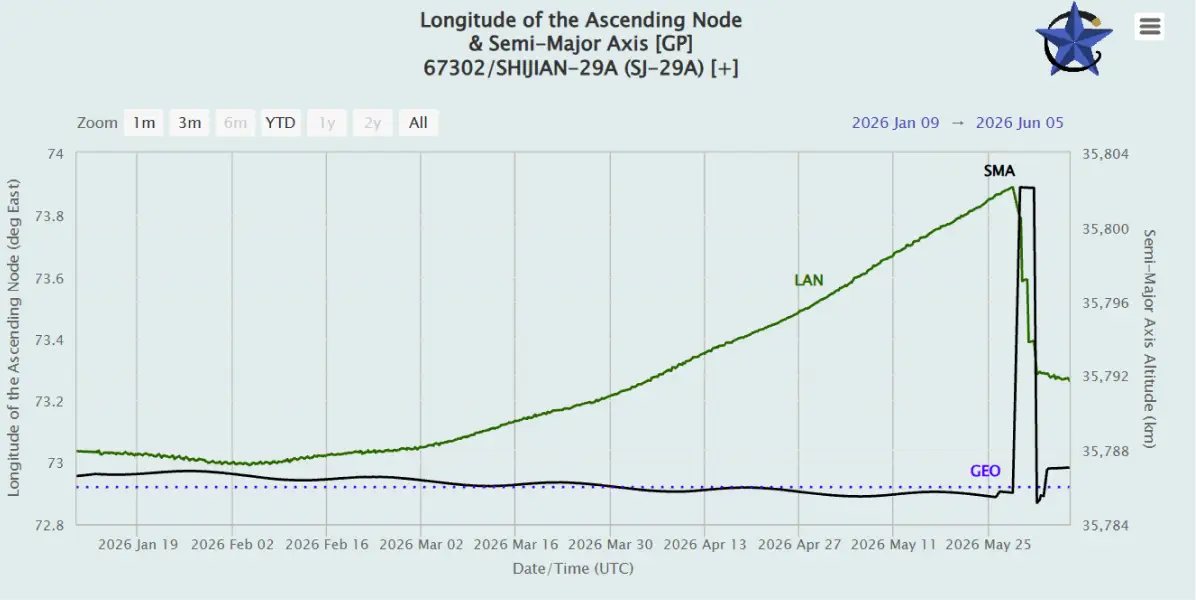
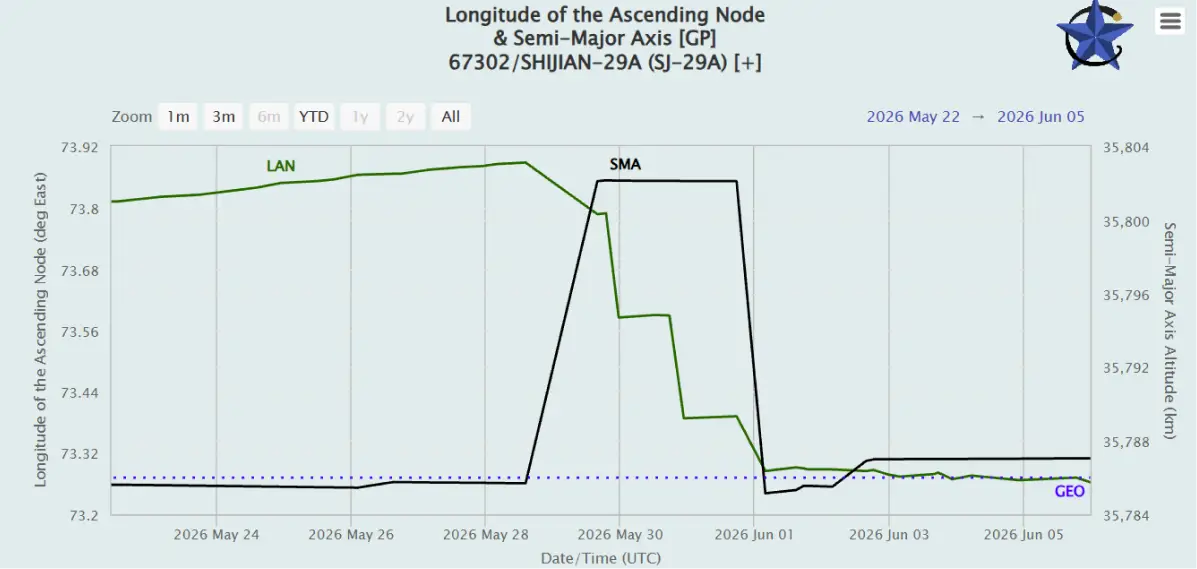
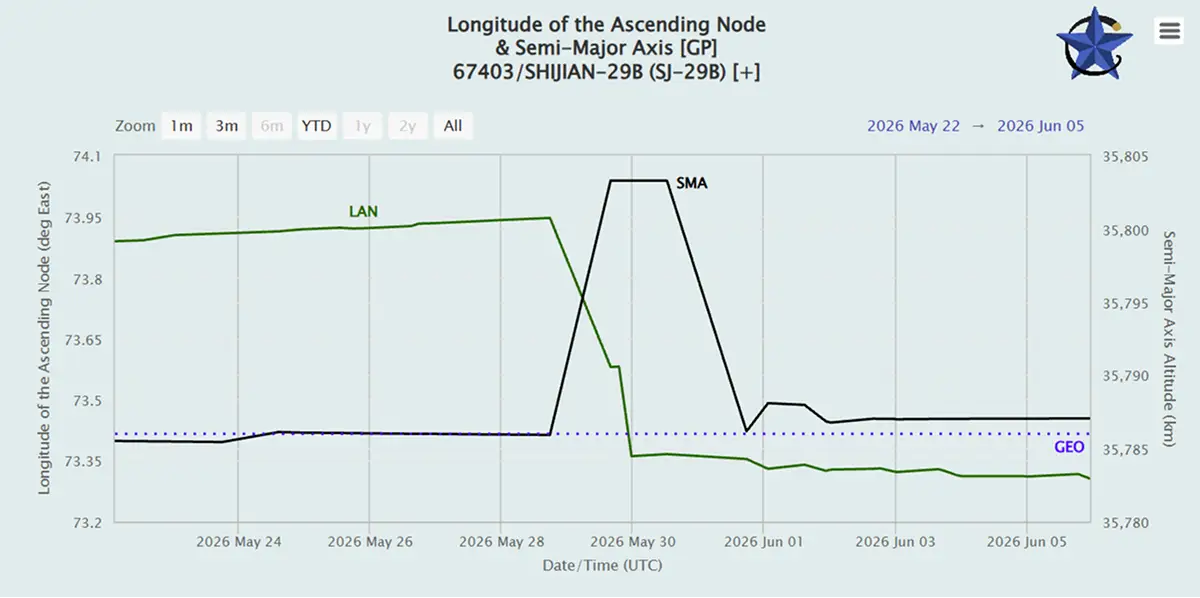
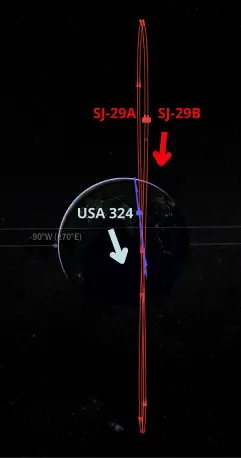
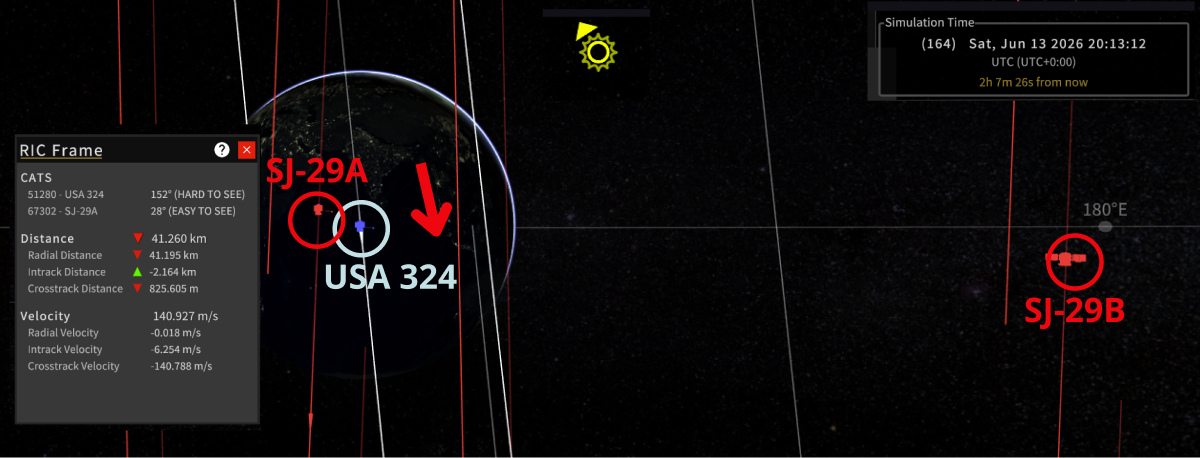
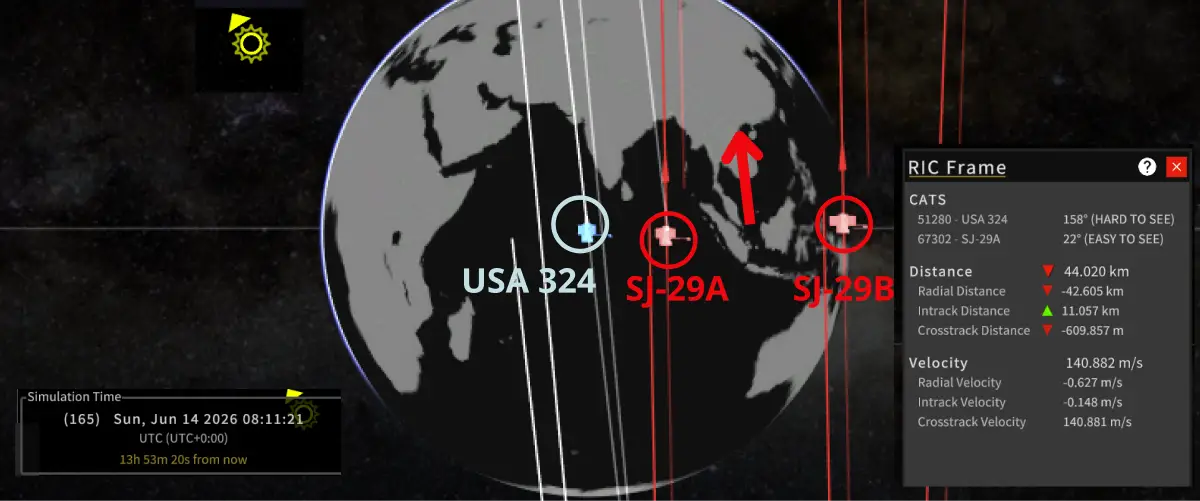
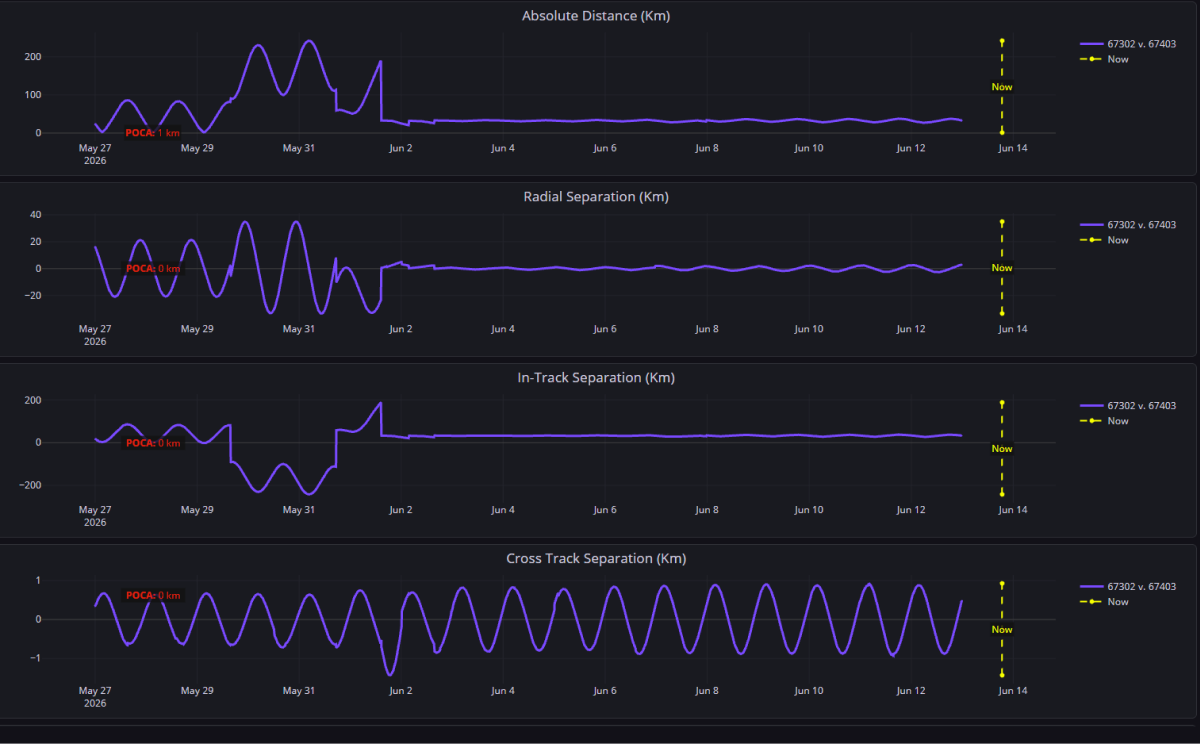
A paired Shijian-29 test system has tightened its formation in the geostationary belt to roughly 30–35 km — the closest the two have flown — while the U.S. inspector USA 324 maneuvers to keep both in view.
Since arriving in the geostationary belt in early January, Shijian-29A and -29B have held station near 73°E, drifting in and out of a loose 10–90 km formation. Over the first week of June the pair executed a coordinated set of burns that narrowed their separation to about 30–35 km and synchronized their longitudinal drift — the tightest, most deliberate formation the system has shown to dat
Element-set histories show both objects adjusting semi-major axis within hours of one another — behavior consistent with a planned, jointly commanded maneuver rather than independent station-keeping. The timing, direction, and magnitude of the burns line up too closely to be coincidental.
The synchronization suggests SJ-29A/B is rehearsing cooperative proximity operations. Two spacecraft holding a controlled, close formation is a prerequisite for inspection, servicing, or coordinated RPO against a third object — a capability with obvious dual-use implications.
The maneuver did not go unobserved. USA 324, a U.S. geostationary inspector, shifted longitude in the days that followed to hold a viewing geometry on the pair, settling into a position roughly one degree west.
Orbital parameters — SJ-29A (9 Jun 2026)
| Date | Object | Δa (km) | Resulting sep. (km) |
|---|---|---|---|
| 5 Jun | SJ-29B | +12 | ~70 |
| 7 Jun | SJ-29A | −9 | ~48 |
| 8 Jun | SJ-29A/B | paired | ~35 |
Whether SJ-29A/B is working toward inspection of a partner satellite, a docking demonstration, or simply maturing the guidance needed to fly close formations, the trend line is clear: each pass tightens, and each maneuver is better coordinated than the last. The Flash will track the pair’s separation through the next station-keeping cycle.
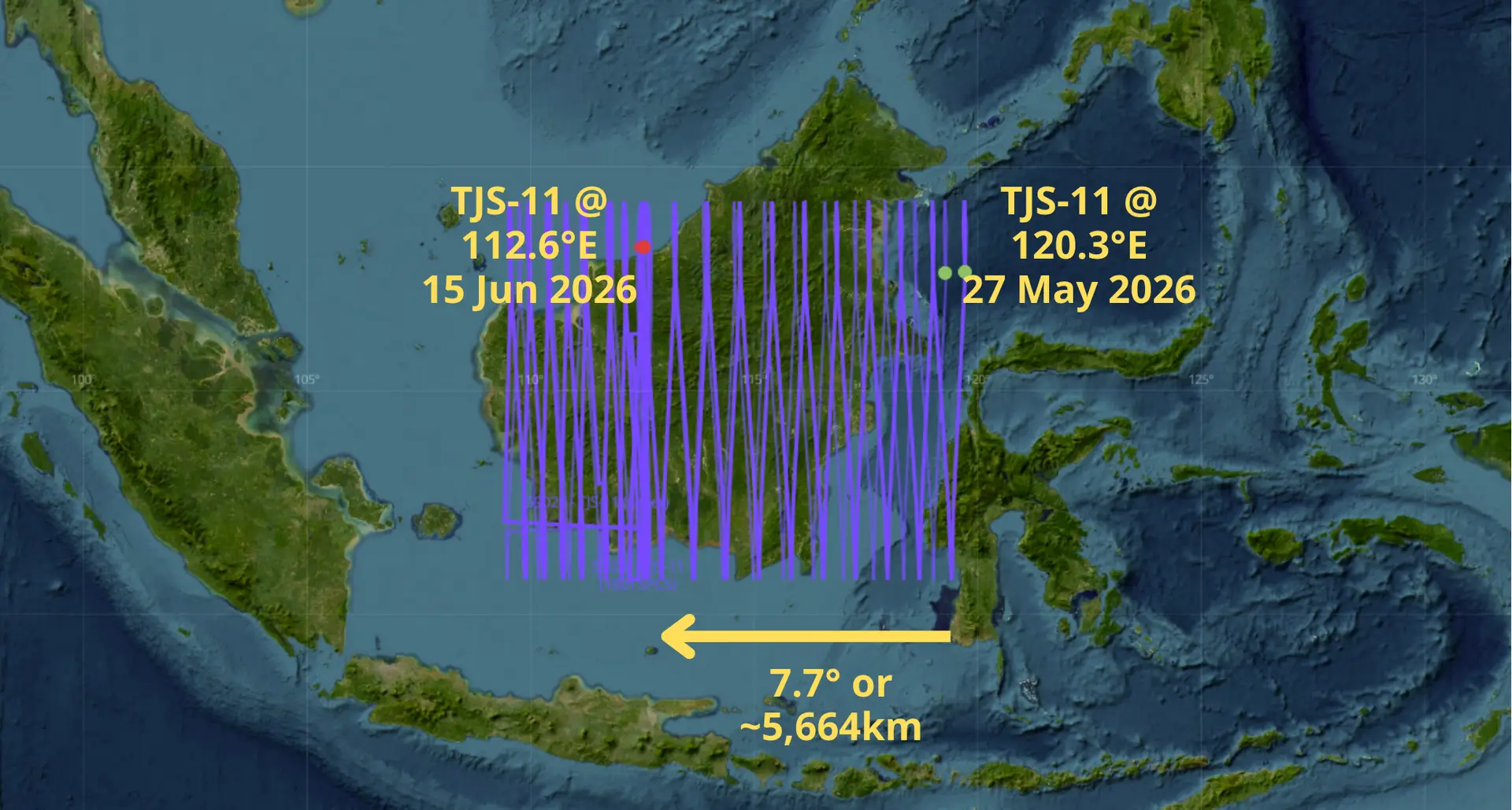
For the first time since settling into GEO in early March 2024, China maneuvered TJS-11 (59020). Operators raised its average altitude 58 km to generate a westward drift. From 27 May – 11 June, TJS-11’s position shifted from 120.3°E to 112.6°E — about 5,664 km. As of 15 June data, it had returned to geosynchronous altitude and appears parked at 112.6°E.
China launched TJS-11 on 23 February 2024 on an LM-5 with the extended fairing — only the second use of that configuration (the first was Yaogan-41 on 15 December 2023), and the first TJS to fly on the LM-5. The extended fairing is 18.5 m tall versus the 12.3 m standard. As usual, China released little detail, citing “multi-band, high-speed satellite communication technology verification.”
| Dates | SMA change | Drift |
|---|---|---|
| 27 May – 5 Jun | +58 km | 0.45°/day west |
| 7 Jun | −30 km | 0.35°/day west |
| 9–15 Jun | −33 km | No drift (parked) |
For its first 26 months TJS-11 sat ~3° west of Yaogan-41. I see no notable new neighbors at its new slot; the nearest objects are Telkomsat 113BT (Indonesian COMSAT, 2024), PSN N5 (Indonesian COMSAT, 2025), Koreasat-5 (South Korean COMSAT, 2006), and Koreasat-5A (2017).
TJS-11 conducted its first non-station-keeping maneuvers in over two years and now sits ~33 km above GEO. After 26 months of routine east/west station keeping, a deliberate 7.7° relocation is a meaningful shift worth tracking.
Staff Analyst
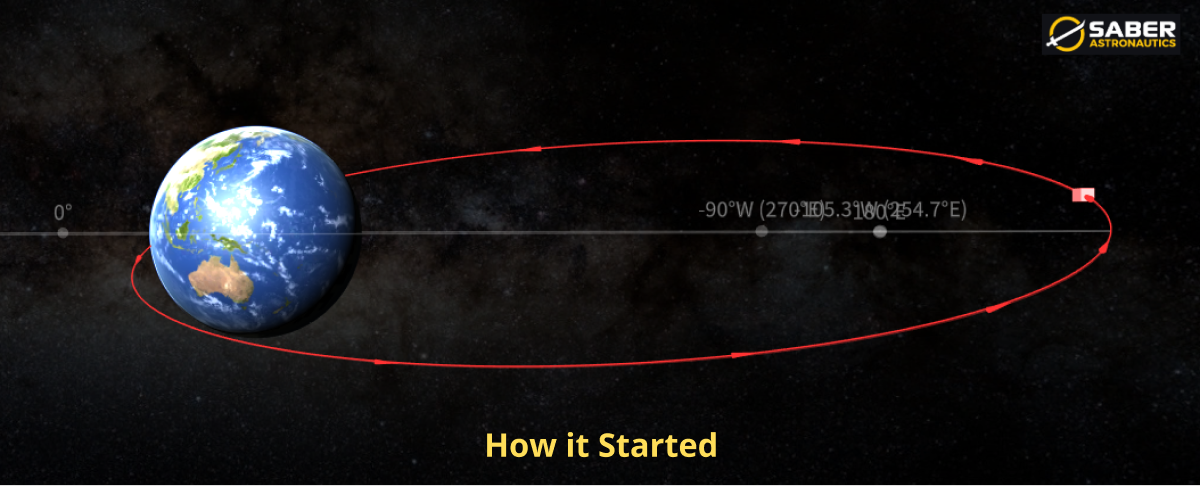
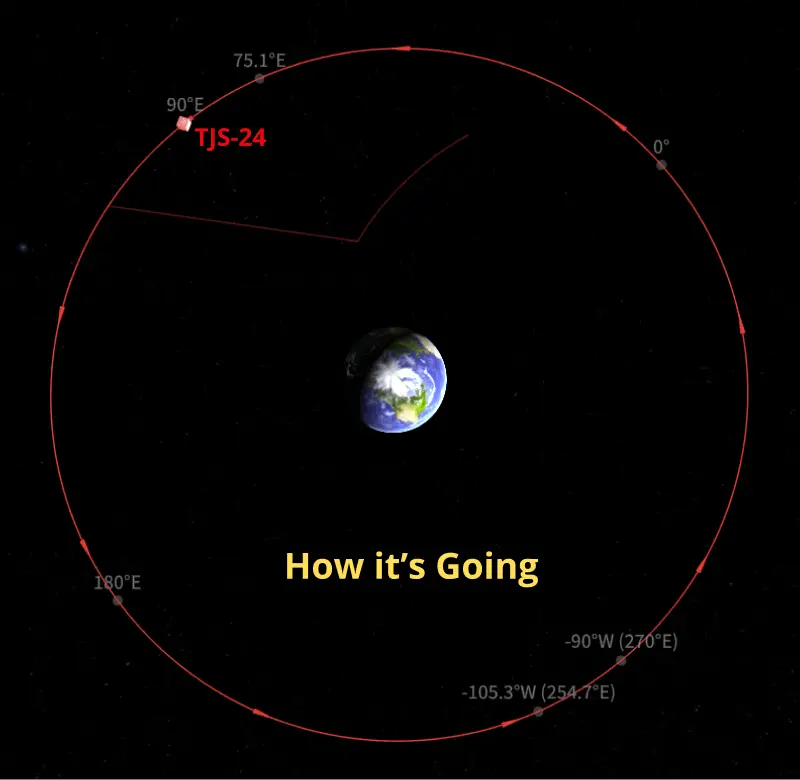
After ~10 days in Geosynchronous Transfer Orbit (GTO), Chinese operators circularized TJS-24 (69235) and parked it in GEO at 90.3°E. With inclination near 0°, it is effectively geostationary. China placed it west of TJS-10 and east of TJS-4, with no other notable neighbors. The mission description is the now-familiar “multi-band, high-speed satellite communication technology verification” — identical to that given for TJS-10, 11, 15, 16, 17, 19, 20, 23 and 24.
| Element | Late May (GTO) | 5 Jun (GEO) |
|---|---|---|
| Inclination | 19.5° | 0° |
| Eccentricity | 0.73 | 0 |
| Apogee | 35,858 km | 35,790 km |
| Perigee | 176.7 km | 35,783 km |
Staff Analyst
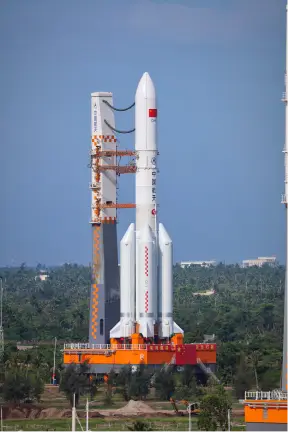
China launched an LM-5 with extended fairing carrying TJS-25 (69474) from Wenchang. Per official sources, it reached the planned orbit and “will be mainly used to carry out multi-band and high-speed communication technology validation tests.” TJS-25 will likely spend ~10 days in GTO before being circularized into its GEO slot. It carries the identical mission description used for TJS-10, 11, 15, 16, 17, 19, 20, 23, 24 and 25.
Notably, TJS-20, 23 and 25 all launched on the LM-5 with extended fairing and sport similar mission patches — suggesting related missions:
TJS-25 first observation in GTO (11 Jun)
Eccentricity = 0.76 · Apogee = 45,755 km · Perigee = 224.1 km
With TJS-25, 14 of 23 series members have publicly unknown missions.
| Yr | Name | Alt name | Sat # | Int’l des | Site | Vehicle | Mission |
|---|---|---|---|---|---|---|---|
| 2015 | TJS-1 | Qianshao-3 1 | 40892 | 2015-046A | Xichang | LM-3B | SIGINT |
| 2017 | TJS-2 | Huoyan-1 01 | 41911 | 2017-001A | Xichang | LM-3B | Early Warning |
| 2018 | TJS-3 | — | 43874 | 2018-110A | Xichang | LM-3C | Unknown/Mobile |
| 2019 | TJS-4 | Qianshao-3 2 | 44637 | 2019-070A | Xichang | LM-3B | SIGINT |
| 2020 | TJS-5 | Huoyan-1 02 | 44978 | 2020-002A | Xichang | LM-3B | Early Warning |
| 2021 | TJS-6 | Huoyan-1 03 | 47613 | 2021-010A | Xichang | LM-3B | Early Warning |
| 2021 | TJS-7 | — | 49115 | 2021-077A | Xichang | LM-3B | Early Warning? |
| 2021 | TJS-9 | Qianshao-3 3 | 50574 | 2021-135A | Xichang | LM-3B | SIGINT? |
| 2023 | TJS-10 | — | 58204 | 2023-169A | Wenchang | LM-7A | Unknown/Mobile |
| 2024 | TJS-11* | — | 59020 | 2024-037A | Wenchang | LM-5 ext | Unknown |
| 2024 | TJS-12 | Qianshao-3 4 | 62374 | 2024-246 | Xichang | LM-3B | Unknown |
| 2024 | TJS-13 | Huoyan-1 04 | 62188 | 2024-227 | Xichang | LM-3B | Early Warning/HEO |
| 2025 | TJS-14 | — | 62804 | 2025-017A | Xichang | LM-3B | Unknown |
| 2025 | TJS-15 | King of the West | 63157 | 2025-045A | Xichang | LM-3B | Unknown/Mobile |
| 2025 | TJS-16 | King of the East | 63397 | 2025-064A | Wenchang | LM-7A | Unknown/Mobile |
| 2025 | TJS-17 | King of the North | 63524 | 2025-073A | Xichang | LM-3B | Unknown/Mobile |
| 2025 | TJS-19 | King of the South | 63924 | 2025-097A | Xichang | LM-3C | Unknown |
| 2025 | TJS-20* | — | 66142 | 2025-238A | Wenchang | LM-5 ext | Unknown |
| 2025 | TJS-21 | Huoyan-1 05 | 66586 | 2025-269A | Xichang | LM-3B | Early Warning/HEO |
| 2025 | TJS-22 | — | 66990 | 2025-290A | Xichang | LM-3B | Unknown |
| 2025 | TJS-23* | — | 67226 | 2025-306 | Wenchang | LM-5 ext | Unknown |
| 2026 | TJS-24 | — | 69235 | 2026-116 | Wenchang | LM-7A | Unknown |
| 2026 | TJS-25* | — | 69474 | 2026-129 | Wenchang | LM-5 ext | Unknown |
Staff Analyst
hina launched an LM-2D with four Guowang test satellites (69320–69323) from Xichang; all entered their preset orbits. The launch resembles the 1 April 2025 (HJS-6A–D) and 24 April 2026 (HJS-9A–D) missions — both LM-2D, four test satellites, 55° inclination. This group released near 450 km (similar to HJS-6, lower than HJS-9 at 505 km).
LM-2D launch of the four Guowang test satellites
The new satellites (69320–23) are inclined 55.0° with SMAs of ~449 km. On 6 June they held a 1.4° east RAAN offset from HJS-6, but SMA differences are precessing them west toward the HJS-6 plane at ~0.1°/day, so they will end up west of the HJS-6 group. By my count this brings the total to 27 Guowang test satellites on orbit.
China has launched three groups of four satellites into orbits about half the altitude of operational Guowang — all on LM-2Ds — likely testing China SatNet’s plans for an “inner shell.” Group 1 (HJS-6B–D, 63429–31; 63428 reentered 16 Oct 2025) is raising SMA ~50 km toward 501 km. Group 2 (HJS-9A–D, 68831–34) is actively maneuvering, SMAs 507–508 km, ~6° west RAAN offset from Group 1. Group 3 (69320–23) shows no maneuvers yet (not unusual); its eventual plane depends on the timing of SMA increases.
Fig. 9. LM-2D launch montage, four Guowang test satellites. (nasaspaceflight.com)
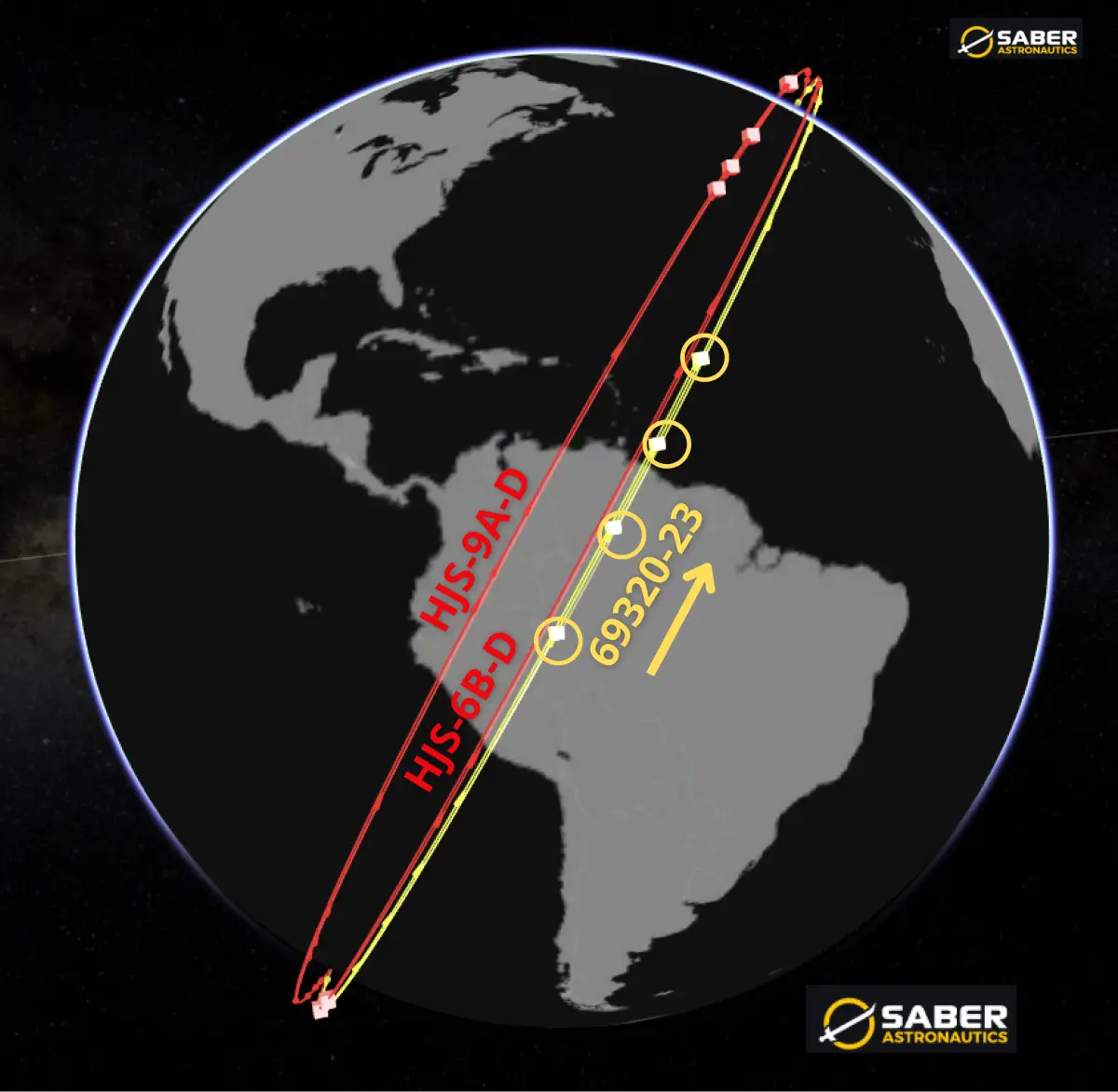
Fig. 10. Newest test satellites share 55° inclination with a 1.4° east RAAN offset from HJS-6, closing at ~0.1°/day. (saberastro.com)
Per Andrew Jones (SpaceNews, Apr 2021), ITU filings revealed plans for two “GW” LEO constellations totaling 12,992 satellites, spanning 500–1,145 km altitude and 30–85° inclination. China has now conducted ten test launches.
| # | Date | Sats | Catalog | Vehicle | Site | Incl | SMA |
|---|---|---|---|---|---|---|---|
| 1* | 9 Jul 2023 | 2 | 57288–89 | LM-2C | Jiuquan | 86.5° | 1,111 km |
| 2* | 23 Nov 2023 | 3 | 58425–27 | LM-2D | Xichang | 50.0° | 1,104 km |
| 3* | 5 Dec 2023 | 1 | 58505 | Jielong-3 | Yellow Sea | 86.5° | 1,111 km |
| 4* | 30 Dec 2023 | 3 | 58691–93 | LM-2C | Jiuquan | 50.0° | 1,104 km |
| 5 | 30 Nov 2024 | 1 | 62186 | LM-2C | Wenchang | 50.0° | 1,104 km |
| 6 | 1 Apr 2025 | 4 | 63428–31 | LM-2D | Jiuquan | 55.0° | 450–470 km |
| 7 | 16 Sep 2025 | 4 | 65617–20 | LM-2C | Jiuquan | 50.0° | 1,104 km |
| 8 | 11 Apr 2026 | 1 | 68687 | Jielong-3 | Yellow Sea | 86.5° | 1,004 km |
| 9 | 24 Apr 2026 | 4 | 68831–34 | LM-2D | Xichang | 55.0° | ~507 km |
| 10 | 31 May 2026 | 4 | 69320–23 | LM-2D | Xichang | 55.0° | ~450 km |
Staff Analyst
China ran four Qianfan (SpaceSail) launches in nine days, including the debut of the Long March-12B. Across 12 Qianfan launches to date, seven have used the LM-6A (Taiyuan), four the LM-8 (Wenchang), and one the LM-12B (Jiuquan).
— the four Qianfan launches (LM-12B, LM-6A, LM-8, ZQ-2E)
Table 5. The 9-day Qianfan barrage.
| Date | Vehicle | Site | Payload | Notes |
|---|---|---|---|---|
| 1 Jun | LM-12B | Jiuquan | Qianfan 163–164 (“Group 8”) | LM-12B debut; no recovery test; co-planar w/ Group 5 |
| 4 Jun | LM-6A | Taiyuan | 18 sats (“Group 11”) | Fills the last empty plane |
| 5 Jun | LM-8 | Wenchang | 18 sats (“Group 12”) | Not cataloged as of 14 Jun |
| 9 Jun | ZQ-2E | — | DTC-01 + China Mobile 02 | Test sats, 400 km / 55°; excluded from counts |
The LM-12B released Qianfan 163/164 at ~1,034 km — only 35 km below the 1,069 km operational orbit and far higher than the typical ~810 km of LM-6A/LM-8 launches, shortening the climb. Group 5 had lost two of 18 to its operational altitude, and 163/164 may serve as replacements. Less encouraging: the LM-12B left its spent upper stage (69327) in a 732×1,022 km orbit that, per Dr. Darren McKnight of LEOLabs, will decay over the next “200–400 years.” The Group 11 upper stage similarly sits in a 773×631 km orbit.
Each Qianfan satellite is believed to weigh ~300 kg in a flat-pack design with a single solar array, stacked in two parallel columns to maximize fairing packing. Each carries an electric Hall-effect thruster burning krypton, producing 20 mN of thrust at a specific impulse of ~1,385 s.
Table 6. Qianfan groups. (saberastro.com)
| Group | Catalog | Vehicle | Launched | Status |
|---|---|---|---|---|
| 1 | 60379–60396 | LM-6A | 6 Aug 2024 | 17/18 (Qianfan 7 may be inop) |
| 2 | 61552–61569 | LM-6A | 15 Oct 2024 | 3/18 |
| 3 | 62238–62255 | LM-6A | 5 Dec 2024 | 16/18 (39 & 42 inop); co-planar Group 10 |
| 4 | 62785–62802 | LM-6A | 23 Jan 2025 | 18/18 |
| 5 | 63159–63176 | LM-8 | 11 Mar 2025 | 16/18 (77 & 83 inop); co-planar Group 8 |
| 6 | 66033–66050 | LM-6A | 17 Oct 2025 | 17/18 (101 inop) |
| 7 | 68636–68653 | LM-8 | 7 Apr 2026 | Raising (1,024–1,063 km) |
| 8 | 69325–69326 | LM-12B | 1 Jun 2026 | 2 sats @ 1,034 km; co-planar Group 5 |
| 9 | 69073–69090 | LM-6 | 12 May 2026 | 17/18 raising (137 lagging; 850–880 km) |
| 10 | 69104–69121 | LM-8 | 17 May 2026 | Raising (825–850 km); co-planar Group 3 |
| 11 | 69382–69399 | LM-6A | 4 Jun 2026 | Raising (805–807 km) |
| 12 | 2026-125 | LM-8 | 5 Jun 2026 | Not yet cataloged (14 Jun) |
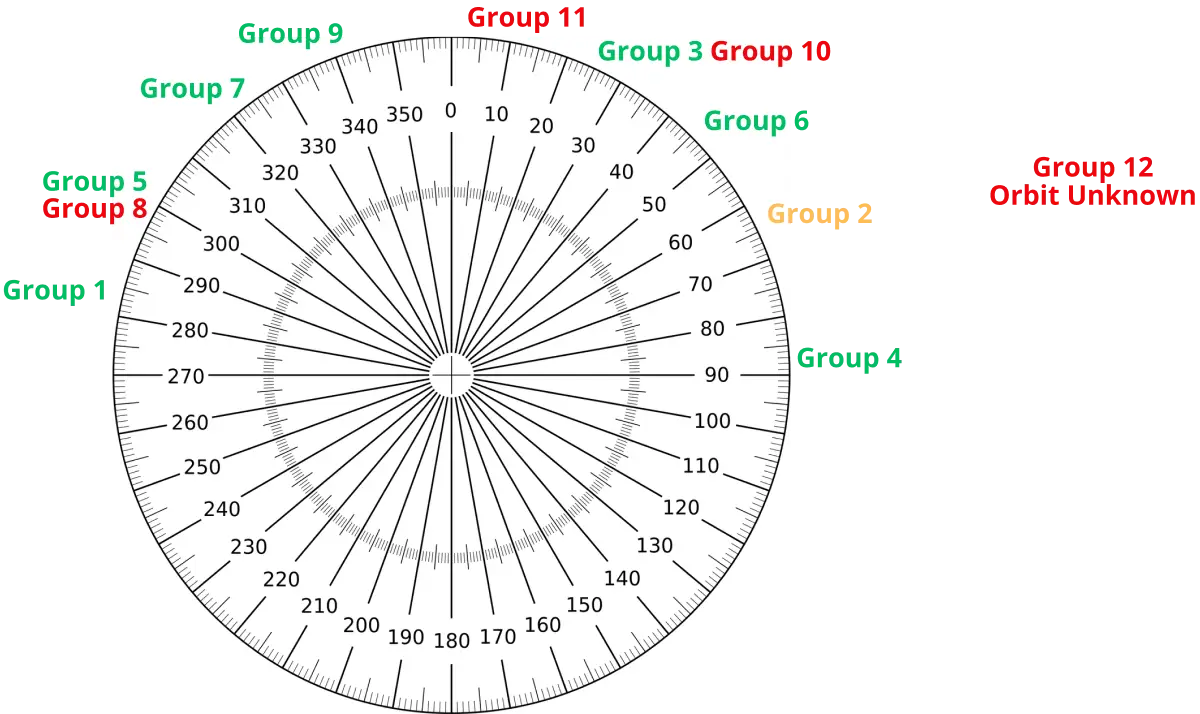
Fig. 11. Current Qianfan constellation — plane distribution. (saberastro.com)
Driven by Luch maneuvers, the two closed to <5 km from 2–4 June — and at 0812 UTC on 2 June, JCO reported them <1 km apart. Luch maneuvered again on 3 June and began separating ~1.5 km/day. Intelsat 39 maneuvered on 4 June (0913 UTC); by 5 June the two were ~19 km apart and separating ~4 km/day. TLE data then showed them <5 km apart again on 8 June (~0907 UTC).
| Date | Min separation | Note |
|---|---|---|
| 2 Jun, 0812 UTC | <1 km | Closest reported approach |
| 2–4 Jun | <5 km | Multiple POCAs (4, 3, 2 km) |
| 4 Jun, 0913 UTC | — | Intelsat 39 maneuvers |
| 5 Jun | ~19 km | Separating ~4 km/day |
| 8 Jun, 0907 UTC | <5 km | Pair closes again |
Western intelligence assesses the Luch vehicles as SIGINT “interceptors” that position within the narrow cone of uplink data beams to geostationary satellites — many of which fly older, unencrypted command links. Since 2023, Luch-2 has reportedly approached 17 European satellites. Officials judge it unlikely to jam or destroy directly, but capable of harvesting data on how such systems could be disrupted — potentially including the command links used for orbital adjustments.
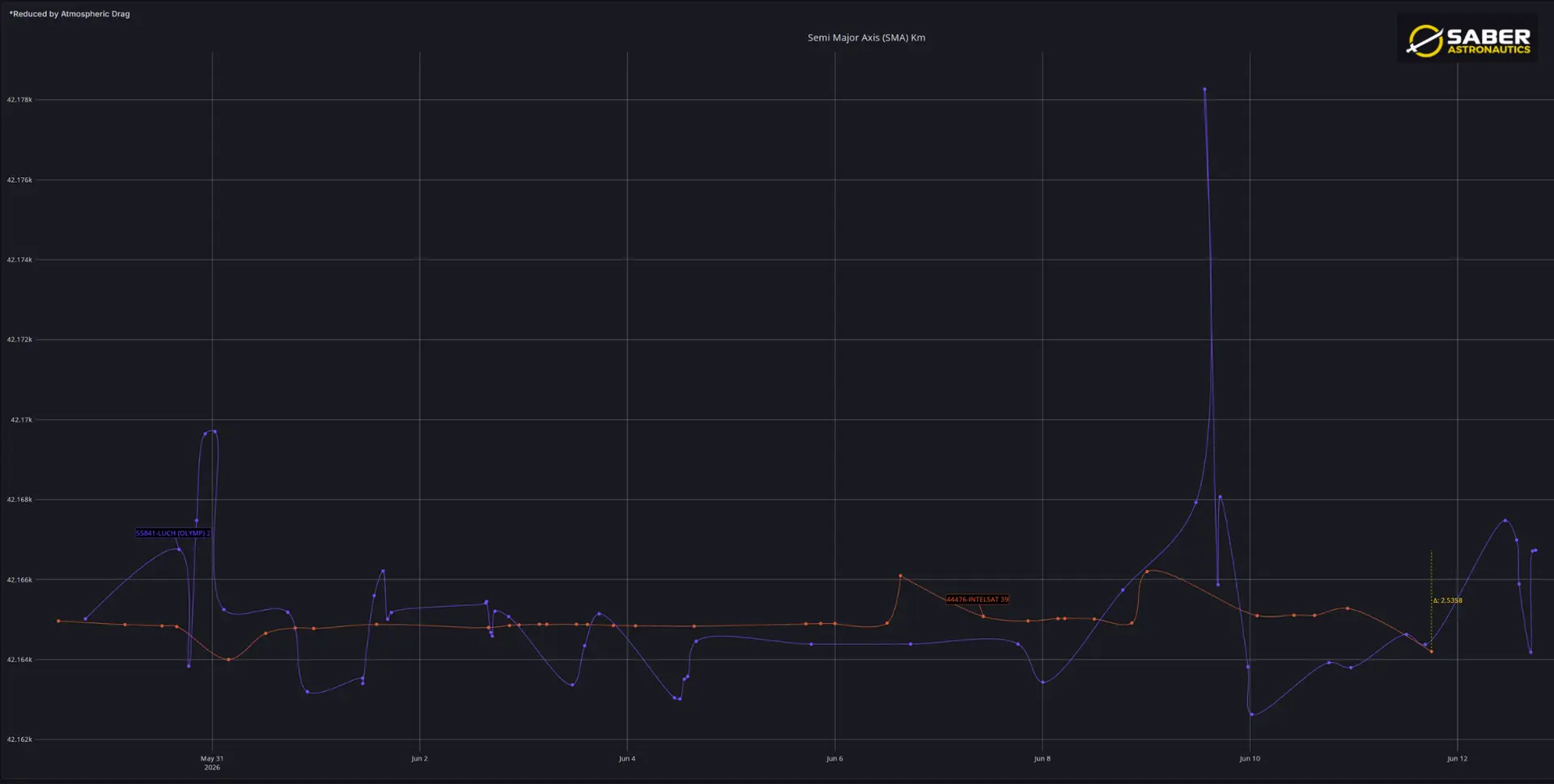
Fig. 12. Luch-2’s suspicious maneuvers (FT, ft.com); SMA histories, 31 May – 12 Jun (saberastro.com).
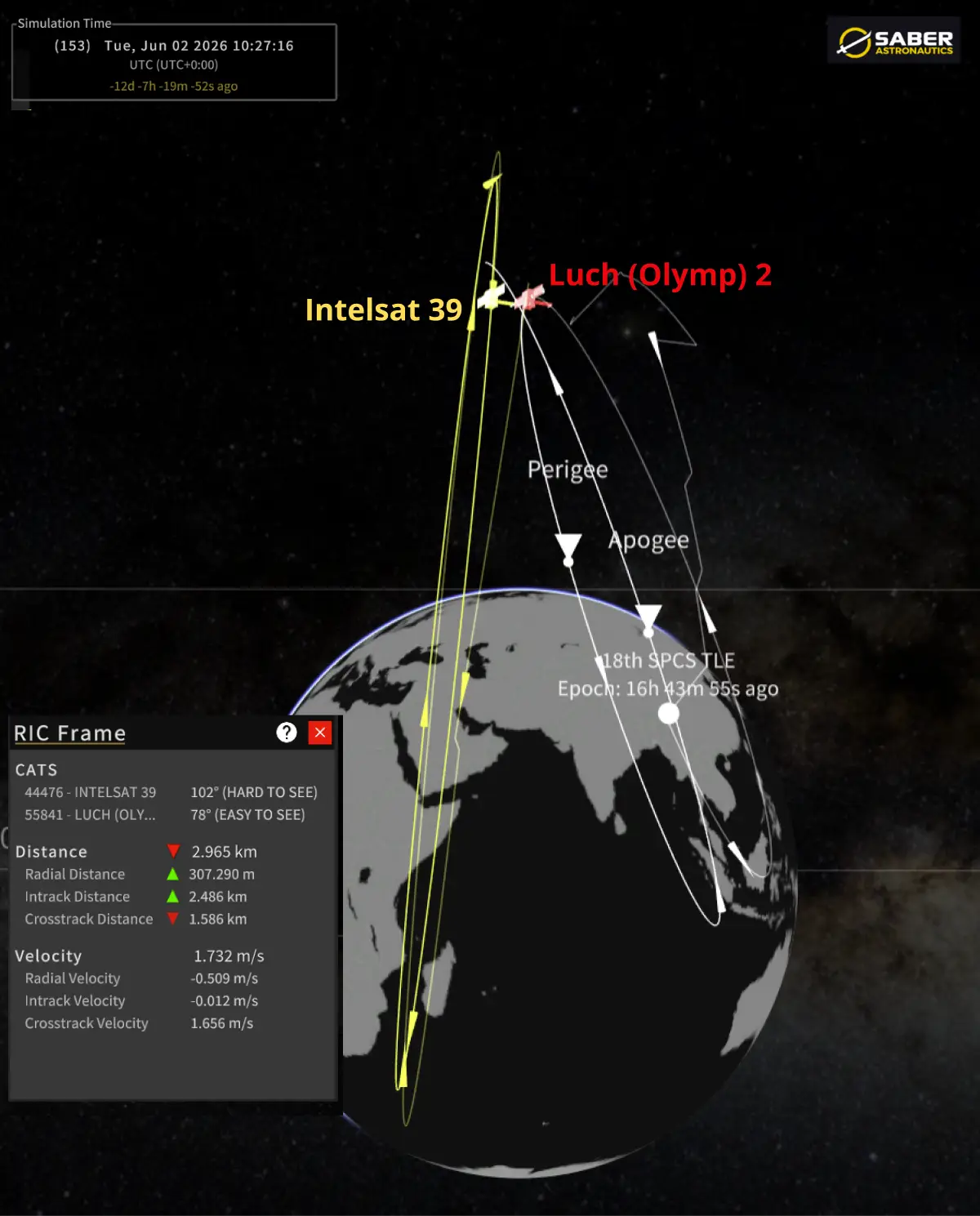
Fig. 13. 2 June closest approach and 31 May – 4 June absolute separation. (saberastro.com)
@NatSecLedger published an analysis arguing that the FY2027 US Space Force budget signals the end of the assumption that sensor and shooter share the same airspace. The piece’s thesis, in one line:
The next-generation kill chain doesn’t start with a fighter.@NatSecLedger
The argument, in summary: the budget funds an orbital sensing-and-relay architecture that lets a target found in space be engaged by any networked shooter — aircraft, ship, or ground launcher — that never had to see it. Key budget facts cited:
A new RDT&E program element, Long-Range Kill Chains (LRKC), requests $1.39 B in FY2027, funding three projects: targeting-data relay infrastructure, support for “Golden Dome for America,” and a new-start Space-Based Interceptors effort against ICBMs and hypersonic glide vehicles.
Because the sensor layer is in orbit and the data layer is proliferated, the same targeting picture can reach an F-35, a collaborative combat aircraft, a naval platform, and a ground launcher simultaneously — a chain that doesn’t begin with an aircraft and can’t be disabled by a single counterspace weapon.
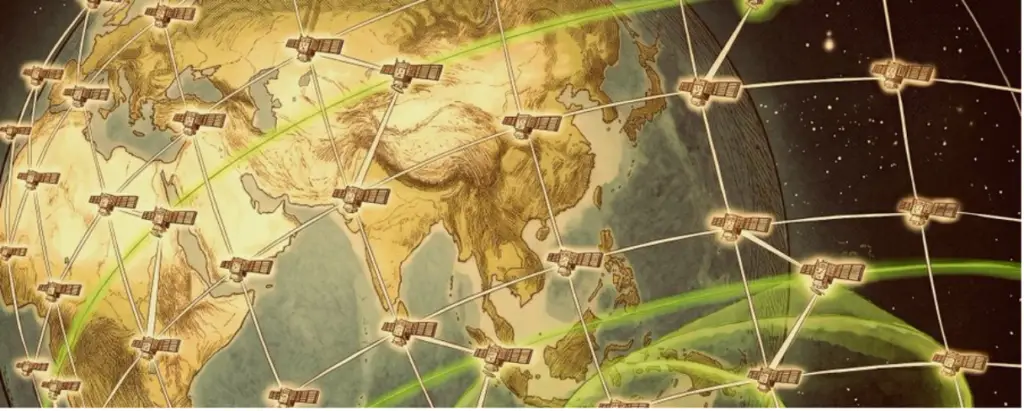
Fig. 14. Space-based sensing and data-relay concept. (@NatSecLedger via X)
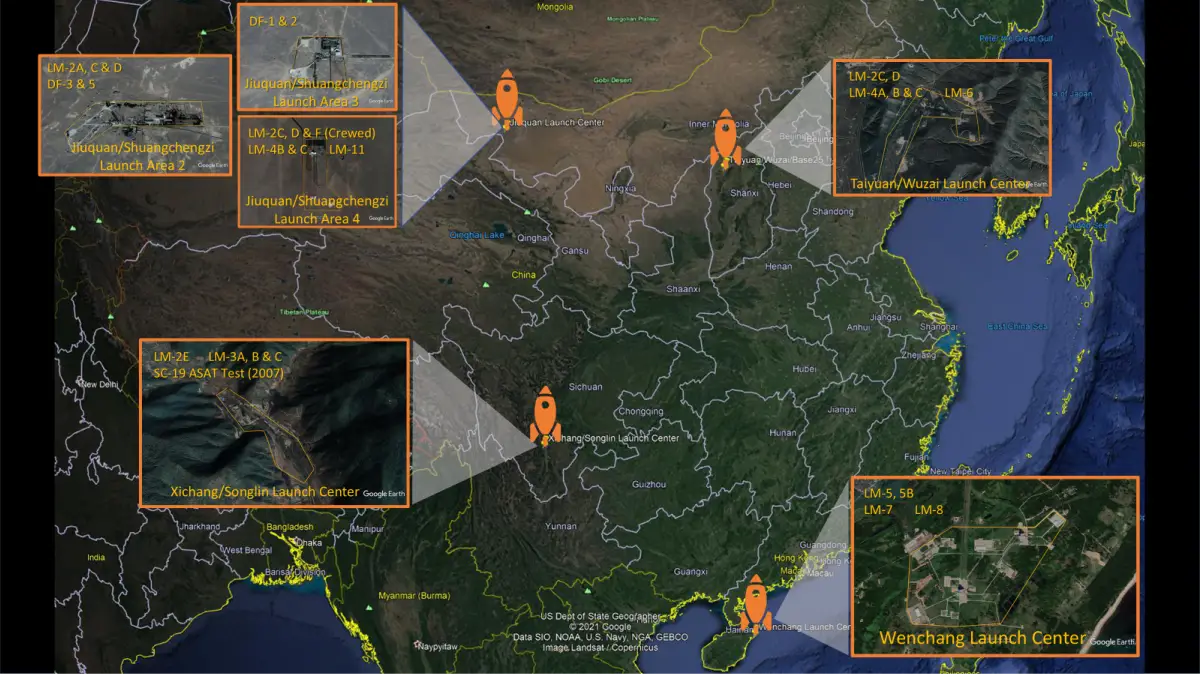
Fig. 15. Handy reference of China’s four major launch sites. (wikipedia.com)
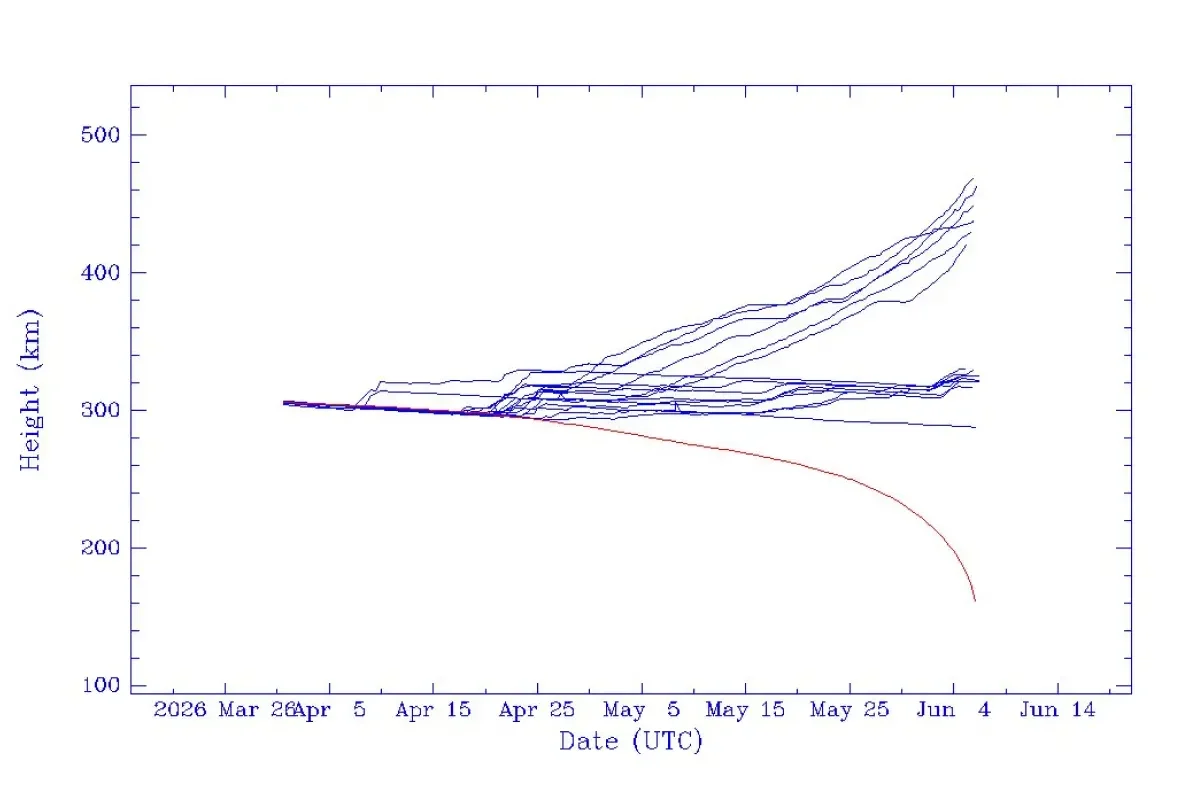
Fig. 16. Russia’s 16 Rassvet-3 comms satellites (launched 23 Mar): one failed and reentered; others raising or making maintenance burns. (@planet4589 via X)
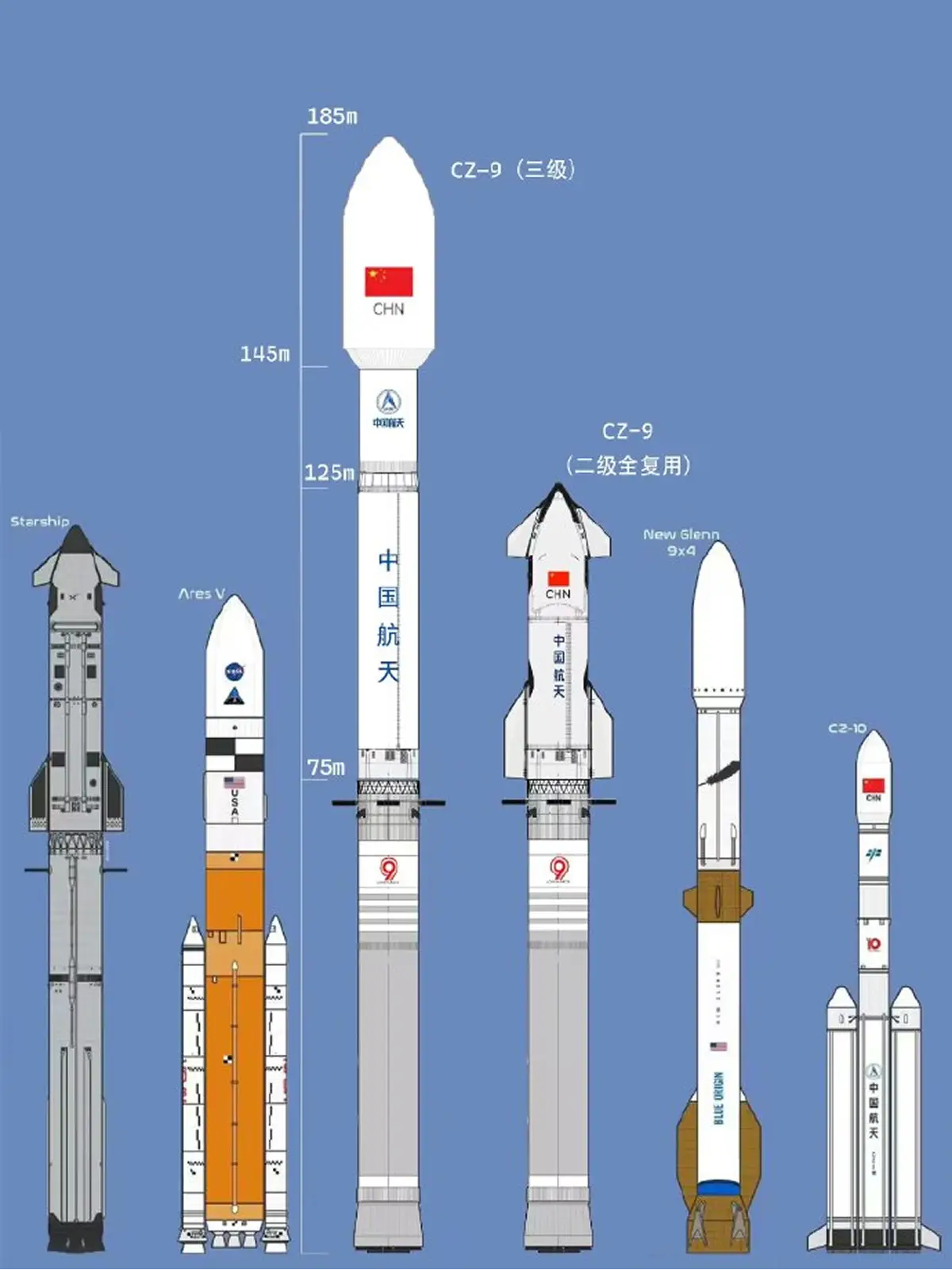
Fig. 17. Reported CZ-9 blueprint specs — body 10.6 m, fairing 15 m, 3-stage variant up to 185 m tall. (@raz_liu via X)

Fig. 18. No comment required. (@wtfcetialpha5 via X)
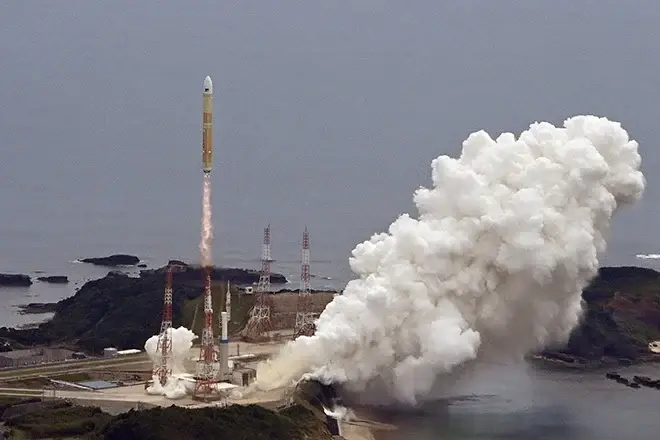
Fig. 19. Bucket-list item: viewing a Tanegashima launch. (asahi.com)
Issue 147 is built entirely from open sources. Orbital assessments derive from publicly available element sets and commercial tracking; reporting and imagery are credited below.
Flash Insider
Subscribe to unlock full access to this Issue and the complete Flash archive.
Subscribe Now Already Subscribed? Log In « BackInsider feature
Download any issue or article as a brief-ready PDF or clean HTML. Become a Flash Insider to unlock exports and the full archive.
See Insider plans Already an Insider? Log in