
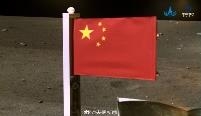
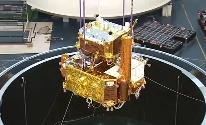
China launched Chang’e 5 on 23 November 2020, its most ambitious lunar mission to date, with the goal of returning lunar material to Earth.
– 23 November 2020: China successfully launched its most ambitious mission to the Moon to date. Chang’e 5 is designed to bring a handful of lunar rocks to Earth in 2020.
– Long March-5 launched the 18,000lb payload from Wengcheng.
– Chang’e 5 consists of 4 robotic spacecraft. The quartet travels to the Moon together: 1) a service spacecraft provides solar power and propels the group to the Moon; 2/3) a lander and vehicle; and 4) a capsule to return to earth.
– Mission is scheduled to take about 23 days total and bring back 2-4 kg of material. Chang’e 5 is not equipped to survive lunar night.
The complexity of Chang’e 5 allows China to test out how to rendezvous and dock spacecraft in orbit around the Moon. The meetup in lunar orbit is meant to test out capabilities needed on future missions. A mission designed to return samples from Mars could certainly draw from Chang’e 5. The Chang’e 5 mission is very similar in its flight profile to that of NASA’s Apollo missions, which used similar techniques for putting people on the Moon. This mission could serve as practice for future crewed missions to the Moon.
[5 Dec Update: Chang’e 5 successfully landed on the moon, collected samples and is now returning to the Chang’e 5 lunar orbiter for eventual return Earth. The capsule should land in mid-December.]
ISRO returned to launch operations on 7 November 2020, deploying the EOS-01 SAR imagery satellite and nine rideshare payloads.
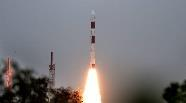
– 7 November 2020: The Indian Space Research Organisation (ISRO) carried out its 1st launch since the COVID-19 Pandemic.
– The EOS-01 synthetic aperture radar (SAR) imagery satellite was successfully injected into a 575-kilometer circular orbit around 16 minutes after launch. (See Satellite Deployment Video)
– In addition to EOS-01, there were nine rideshare payloads onboard.
— 4 Kleos Space (Luxembourg) commercial reconnaissance satellites
— 4 Lemur small sats for American company Spire
— 1 NanoAvionics R2 technology demonstrator
India is preparing to follow up with launch of the GSAT-12R communication satellite into geostationary transfer orbit in December. ISRO will use the PSLV-XL with larger strap-on boosters for the mission.
Galactic Energy reached orbit with the first Ceres-1 launch on 7 November 2020, carrying Tianqi-11 and becoming the second nominally private Chinese launch company to reach orbit.
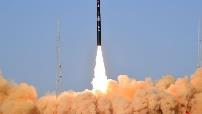
– 7 November 2020: Chinese rocket firm Galactic Energy successfully sent a small satellite into orbit Saturday with the first launch of its Ceres-1 launch vehicle. (see VIDEO)
– The launch placed a 50-kilogram Tianqi-11 satellite into a 500-kilometer Sun-synchronous orbit. The launch means Galactic Energy becomes the 2nd nominally private Chinese launch company to reach orbit.
– The 19-meter-long, 1.4-meter-diameter Ceres-1 can loft 350 kilograms to low Earth orbit or 230 kilograms to a 700-kilometer SSO. It consists of three solid stages and an advanced liquid upper stage.
Galactic Energy is the fourth Chinese private launch company overall to make an orbital launch attempt, all with light-lift solid launchers. Chinese launch, small satellite and related downstream companies have proliferated in China since a central government policy decision in late 2014 to open portions of the space sector to private capital.
China reported that DF-26B and DF-21D missiles launched in August successfully hit a moving target ship near the Paracel Islands in the South China Sea.
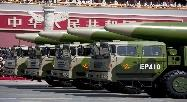
– 14 November 2020: China’s ‘aircraft-carrier killer’ missiles successfully hit target ship in South China Sea.
– China launched 2 missiles in August that travelled thousands of kilometres and hit a moving ship, near the Paracel Islands in the South China Sea. (see China produced VIDEO).
– A DF-26B, was launched from Qinghai (NW), while a DF-21D, lifted off from Zhejiang (E).
China’s ISR constellations are specifically designed to track and target US Naval forces in the region.
A 9 November 2020 op-ed argues that expanding activity beyond GEO requires the United States to prioritize planning and operations in cislunar space.
– 9 November 2020: OpEd by Brien Flewelling. As military and economic activity expands beyond GEO, so too will the associated challenges of space debris, flight safety, and security.
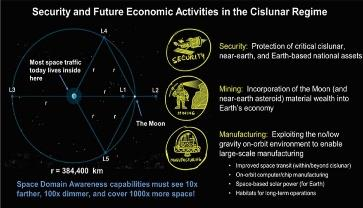
– The cislunar regime…contains the Earth, moon, and Lagrange points where spacecraft may perform the future functions within a cislunar economy.
– US Space Force Spacepower: “commercial investments and new technologies have the potential to expand the reach of vital National space interests to the cislunar regime and beyond in the near future.”
– Beijing has long-term plans to be the preeminent spacefaring nation by 2045. China sees itself as entitled to control space the same way it feels entitled to control the South China Sea.
Assuring U.S. freedom of action in space demands a prioritized national effort to effectively plan for operations in cislunar space. We must evolve our current thinking from an academic exercise pondering possible distant futures and accelerate action to outpace our primary competitor in cislunar space.
In a 7 November 2020 interview, Li Dereng described China’s Gaofen capabilities and a three-step integrated PNTRC architecture for increasingly frequent regional and global coverage.
– 7 November 2020: Interview with Li Dereng, Professor at Chinese Academy of Sciences and Engineering.
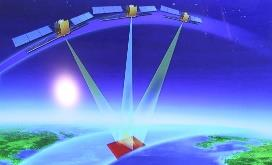
– Gaofen satellites: “a total of 14 satellites…are what we now call high-resolution earth observation satellites, of which 1-7 are civilian satellites, and 8-14 are military satellites.”
— “These 14 stars can be said to be “military-civilian integration””
– “The spatial resolution of the optical satellite reaches 0.1m~0.5m”
— “The best satellite in the U.S. is Keyhole. Its resolution is 0.1m. Our Gaofen 11 can also meet this standard.”
– “The resolution of the radar satellite reaches 0.5m~1m”
– “The resolution of the two GEO satellites is 50m and 15m respectively”
Li Dereng: China is moving to an integrated PNTRC concept (Position, Navigation, Timing, Remote sensing, Communications), in three steps: first, a local coverage of the Chinese coasts with 20 LEO sats and three GEO relays, to get a revisit every 15 minutes. Then, a regional coverage of China and the Belt & Road countries with 50 optical, 50 radar and 150 communication satellites. Finally, a global coverage every 5 minutes, with 200 EO and 300 comms satellites.
Astroscale announced that ELSA-d, its active-debris-removal demonstration mission, would launch on Soyuz from Baikonur in March 2021.
– American efforts to remain the dominant space power will likely trigger counterbalancing as China attempts to maintain access to space
– Sino-US space relations could enter a period of uncontrolled escalation due to: 1) lack of a mutual restraint system; 2) an existing space law regime that fails to keep pace with a rapidly changing space environment; and 3) techno-environmental factors that create deterrence instability.
– The United States must formulate an actor-specific strategy for China that establishes deterrence stability through non-escalatory and asymmetric means.
– “We’re not good at it [relations with China], because we don’t understand their history and culture.” (Henry Kissinger). Nowhere are these strategic disconnects more apparent than in Sino-US space competition.
Lift Off!

Flash Insider
Subscribe to unlock full access to this Issue and the complete Flash archive.
Subscribe Now Already Subscribed? Log In « BackInsider feature
Download any issue or article as a brief-ready PDF or clean HTML. Become a Flash Insider to unlock exports and the full archive.
See Insider plans Already an Insider? Log in