U.S. satellites increasingly vulnerable to China’s groundbased lasers
Author Greg GillingerPublished July 19, 2021
U.S. satellites increasingly vulnerable to China’s groundbased lasers
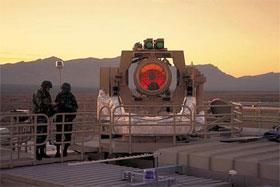
– Analysts have identified five Chinese laser bases – China also has several satellite laser ranging stations – A 1-watt laser has 1 in 1,000 chance to permanently damage a sensor; A 40-watt laser doubles the odds. – To Damage a satellite’s optical elements (pixels and filters) an antisatellite laser must be located ~10 kilometers of intended target. – SPACECOM & NRO to develop a “playbook” to protect US imagery satellites. “We’re pretty comfortable [in asserting] that they are developing directed energy weapons—probably building lasers to blind our satellites”—General Jay Raymond 1 Oct 2019
02Flash Archive · Members Only
China conducts 22d launch of 2020; new Gaufen Earth observation satellite on orbit
Author Greg GillingerPublished July 19, 2021
China conducts 22d launch of 2020; new Gaufen Earth observation satellite on orbit
– 6 Aug: Long March 2D launched from Jiuquan (Gobi Desert) – Gaofen 9 payload: capable of 1 meter resolution imagery – 4x Gaofen 9 satellites now operational; – Gaufen 9 satellites are one component of the China High-resolution Earth Observation System (CHEOS). – Ride-along: Tsinghua gravity/atmosphere scientific satellite (Q-SAT) – This is the 50th Long March 2D launch since the rocket debuted in 1992 – LM 2D is a proven launch vehicle; only one partial failure (2016) China has carried out 22 launches in 2020, including a test flight of the Long March 5Bfor space-station missions and the launch of the Tianwen-1 Mars mission. Three of the 22 launches ended in failure. The country led the world in launches in 2018 and 2019, launching 39 and 34 times respectively. China’s goal for 2020 is around 40 launches, with commercial launch service providers like Expace and Galactic Energy to carry out their own missions.
03Flash Archive · Members Only
Indian Lunar Lander may have survived after all
Author Greg GillingerPublished July 19, 2021
Indian Lunar Lander may have survived after all:
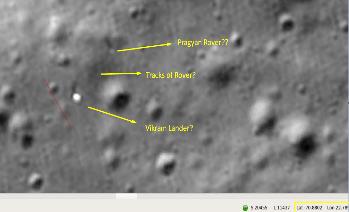
– 31 July 2020: Space enthusiast Shanmuga Subramanian, who found the debris of India’s moonlander Vikram, said that Chandrayaan-2’srover Pragyan seems to be intact on the moon’s surface and had rolled out a few meters from the lander. – New conclusions based on 4 Jan 2020 NASA imagery of Lunar South Pole – Commands were sent to lander blindly for days; lander could have received commands and relayed it to the rover, but lander was not able to communicate it back to the earth Analysts from the Indian Space Research Organisation (ISRO) are in communication with Subramanian in order to confirm his conclusions.
Flash Insider
Continue Reading
Subscribe to unlock full access to this Issue and the complete Flash archive.